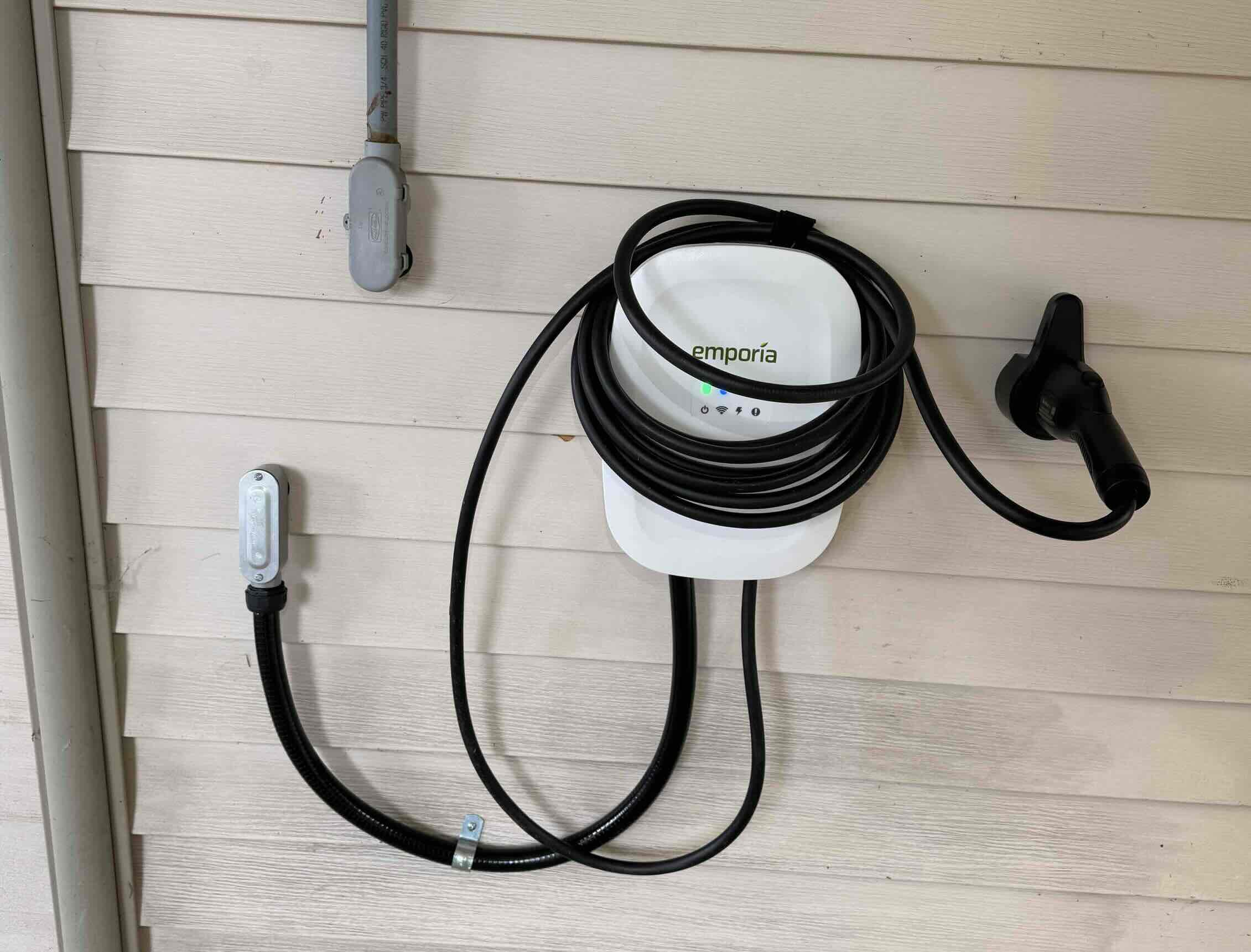
If you are researching hardwired vs plug in EV charger options for your home, you are not alone. This is one of the most common questions we get from homeowners installing a Level 2 charger.
Most people assume plug in is cheaper and easier. In many cases, that is not true.
We want to break this down clearly so you can make the right decision for your home, your vehicle, and your budget.
Understanding Level 2 Charging
Level 1 charging uses a standard 120 volt outlet. It is slow but works for light daily driving.
Level 2 charging uses 240 volts. It charges much faster and is what most EV owners choose for home installation.
When it comes to Level 2, you have two options:
• Plug in charger connected to a 240 volt outlet
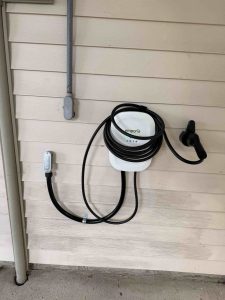
• Hardwired charger permanently connected to the electrical system
Both work. But they are not equal in cost, safety, or performance.
Why Many Homeowners Choose Plug In
A plug in charger feels simple. It looks like adding an outlet and plugging the charger into it.
Many homeowners think:
“I just need an outlet installed and I am good to go.”
It sounds straightforward. But there is more involved than most people realize.
A proper plug in installation often requires:
• An EV rated outlet
• A GFCI breaker
• Proper wiring sized for the load
• A dedicated circuit
Those additional components increase material cost. Labor time is usually the same as hardwired.
Why Hardwired Often Makes More Sense
When comparing hardwired vs plug in EV charger installations, hardwired frequently comes out ahead.
1. Lower total material cost in many cases
A plug in installation requires an EV rated receptacle and often a GFCI breaker. Those parts are more expensive than a standard breaker used in a hardwired setup.
As we have explained to customers before: “It is actually cheaper to go hardwired rather than plug in.”
When you add up the materials, hardwired can cost less.
2. Better long term reliability
With a plug in charger, you have an additional connection point at the outlet. Over time, plugs can loosen or wear. A hardwired connection removes that extra point of failure.
Hardwired installations are more stable and consistent.
3. Stronger performance
Hardwired chargers can often deliver higher continuous output. You avoid the limitations that sometimes come with plug in setups.
In simple terms, hardwired is the safer option and you get more power output.
For most homeowners planning to keep their EV long term, that matters.
When a Plug In Charger Makes Sense
There are situations where plug in is the right choice.
• You plan to move soon and want portability
• You want the ability to unplug and take the charger with you
• You already have a properly installed 240 volt outlet
Even in those cases, the outlet must be correctly installed and rated for EV use. Not every 240 volt outlet is suitable for EV charging.
The Bottom Line
If you are comparing hardwired vs plug in EV charger options, do not assume plug in is cheaper just because it looks simpler.
When you factor in proper materials, safety requirements, and long term performance, hardwired is often:
• More cost effective
• More reliable
• Safer
• More powerful
We are happy to evaluate your home and show you the real numbers before you decide.
If you are ready to install a Level 2 charger and want clear guidance on hardwired vs plug in EV charger options, contact us today for a professional assessment and a code compliant installation.
What to Look for in a Good Electrical Contractor
When choosing a residential electrician in Ridgefield or Clark County, look for a company that is:
Licensed and qualified
Your electrician should be properly licensed, trained, and equipped to perform residential electrical work safely and correctly.
Experienced in home electrical systems
A strong contractor should know how to troubleshoot existing wiring, identify risks, and recommend practical solutions based on your home’s needs.
Focused on safety and code compliance
Electrical work should meet current code requirements and be completed with long-term reliability in mind, whether it is a repair, upgrade, or new installation.
Clear and professional in communication
Look for a contractor who explains the problem clearly, outlines the work in plain language, and sets honest expectations from the beginning.
Able to handle a wide range of residential services
Homeowners often need more than one solution over time. It helps to work with a company that can assist with generator installation, electrical panel upgrades, lighting installation, outlet installation, and other general electrical services in Ridgefield, WA.
MAS Pro Services is Your Trusted Residential Electrical Services in Ridgefield and Clark County
If you are looking for dependable electrical services in Ridgefield, WA, MAS Pro Services can help with everything from emergency electrical repairs to generator installation, panel replacement, EV charger installation, lighting installation, and electrical outlet installation.
Contact Mas Pro today to schedule an electrical safety inspection!