Power surges are more common than most homeowners realize. Sometimes they happen during storms, but many surges actually start inside the home when large appliances cycle on and off. The problem is that even a quick voltage spike can damage electronics, shorten the life of appliances, or create safety risks.
Understanding how home power surge protection works can help you protect your devices, your wiring, and your home.
What Is a Power Surge?
A power surge, also called a voltage spike, happens when electrical voltage suddenly rises above the normal level flowing through your home. Electronics and appliances are designed to operate within a specific voltage range. When that limit is exceeded, even for a split second, the extra electricity can damage internal components.
Surge protectors work by detecting that excess voltage and safely redirecting it to the ground before it reaches your electronics.
What Causes Power Surges?
Power surges can start both inside and outside the home. Internally, overloaded circuits or large appliances turning on and off can create small spikes in voltage. Air conditioners, refrigerators, and power tools are common examples.
External causes can be more dramatic. Lightning strikes near power lines, utility switching, or power returning after an outage can send a sudden burst of electricity through the electrical system.
How Power Surges Can Affect Your Home
The damage from surges isn’t always obvious right away. Sometimes electronics fail instantly, but many times the damage happens gradually as components weaken over time.
Power surges can cause several problems, the main ones are::
- Damage to electronics and appliances such as TVs, computers, refrigerators, and washing machines
- Reduced lifespan of devices due to repeated small voltage spikes
- Overheating wiring or electrical panels that can increase fire risk
Even smaller surges that happen frequently can slowly wear down sensitive electronics.
Recognizing the Signs of a Power Surge
Some surges are obvious. You might notice a circuit that stops working or an appliance that suddenly fails. Other times the signs are more subtle.
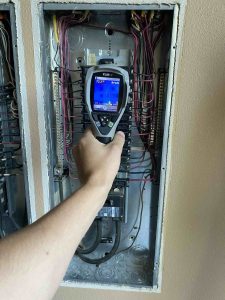
Discolored outlets, burned power strips, electronics that randomly shut off, or devices that begin malfunctioning can all point to surge-related damage. When these warning signs appear, it’s best to have a licensed electrician evaluate the electrical system.
Preventive Measures Against Power Surges
Protecting your home from voltage spikes doesn’t have to be complicated. A few basic precautions can make a big difference.
Unplugging sensitive electronics during storms can prevent damage. Keeping electrical panels properly maintained and avoiding overloaded circuits also reduces the risk of internal surges. Proper grounding is another important factor, since it provides a safe path for excess electricity.
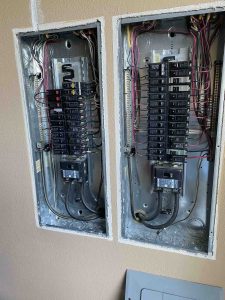
Many homeowners also use plug-in surge protectors for entertainment systems or office equipment. For stronger protection, a whole-house surge protector installed at the electrical panel helps stop surges before they spread through the home’s wiring.
Choosing the Right Surge Protector
Not all surge protectors offer the same level of protection. When comparing options, there are a few specifications worth paying attention to.
The joule rating indicates how much energy the device can absorb before failing. Higher numbers usually mean stronger protection. Response time is another factor, since surge protectors must react extremely quickly to redirect excess voltage. The clamping voltage tells you when the protector begins diverting electricity, and lower levels generally provide faster protection.
Energy partners such as Ready also offer programs that help homeowners manage surge protection and electrical safety.
Protect Your Home with Professional Help
Power surges can damage appliances, interrupt daily life, and create costly repairs. The good news is that proper home power surge protection can significantly reduce those risks.
If you want a professional evaluation, help choosing surge protection devices, or installation of a whole-house surge protector, the team at Mas Pro is ready to help.
What to Look for in a Good Electrical Contractor
When choosing a residential electrician in Ridgefield or Clark County, look for a company that is:
Licensed and qualified
Your electrician should be properly licensed, trained, and equipped to perform residential electrical work safely and correctly.
Experienced in home electrical systems
A strong contractor should know how to troubleshoot existing wiring, identify risks, and recommend practical solutions based on your home’s needs.
Focused on safety and code compliance
Electrical work should meet current code requirements and be completed with long-term reliability in mind, whether it is a repair, upgrade, or new installation.
Clear and professional in communication
Look for a contractor who explains the problem clearly, outlines the work in plain language, and sets honest expectations from the beginning.
Able to handle a wide range of residential services
Homeowners often need more than one solution over time. It helps to work with a company that can assist with generator installation, electrical panel upgrades, lighting installation, outlet installation, and other general electrical services in Ridgefield, WA.
MAS Pro Services is Your Trusted Residential Electrical Services in Ridgefield and Clark County
If you are looking for dependable electrical services in Ridgefield, WA, MAS Pro Services can help with everything from emergency electrical repairs to generator installation, panel replacement, EV charger installation, lighting installation, and electrical outlet installation.
Contact Mas Pro today to schedule an electrical safety inspection!