1) Check grounding
Make sure all receptacles in the home are grounded. To do this easily, you can purchase an inexpensive plug tester. Plug it into each receptacle and it will tell you if the ground wire is connected.
Another easy way to tell if your receptacles are not grounded is if the receptacles are only 2-prong receptacles rather than 3-prong.
If you have 2-prong outlets, you can install GFCIs throughout the home to help address the issue. A better (but more expensive) fix would be to rewire the home with modern wire that has a ground wire along with a hot and neutral wire.
If you have 3-prong receptacles but the tester is showing open ground, you would need to open up the receptacle and check for a loose or disconnected ground wire on that circuit.
Not having a ground wire in a circuit is a serious safety risk and could cause electrocution. We highly recommend calling a licensed electrician to fix any open ground issues in your home.
2) Look for old, corroded, or recalled electrical panels
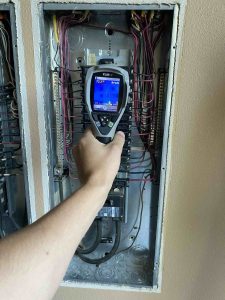
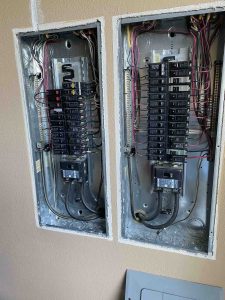
Check and make sure your electrical panel is in good condition. If you are unsure, call a licensed electrician to inspect it.
Also, check to make sure your electrical panel isn’t one of the recalled panels. These include:
Federal Pacific (FPE)
Zinsco
Challenger
Fused panels
If you have one of these panels, it should be replaced immediately because it can be a fire hazard. Some home insurance companies may not insure the home if one of these panels is present.
3) Check electrical wiring types
Older homes may have knob-and-tube wiring or cloth-insulated wiring.
Cloth insulation wire often looks like snake skin. This type of wire can be unsafe because the insulation can corrode and become frail, allowing it to fall apart and expose conductors. Exposed conductors can cause electrical issues and increase the risk of electrocution.
Knob-and-tube is a very old wiring style that can be unsafe due to not having a ground wire, as well as its age and potential for exposed conductors.
4) Test all GFCIs and confirm they’re in required areas
Make sure GFCIs are present in the required areas, including:
Kitchens
Bathrooms
Garage
Exterior outlets
Basements
Laundry rooms
To test a GFCI, simply click the TEST button and make sure it trips. Then reset it by clicking the RESET button.
If it doesn’t trip, doesn’t reset, or there is not a GFCI present in a required area, call a licensed electrician.
5) Watch for flickering lights or loose receptacles
Turn on light switches and make sure no lights flicker while on. Flickering lights can mean a loose connection, which is a fire hazard.
Also check receptacles throughout the home and make sure they do not wiggle when plugging things in. Cords should have a tight fit when plugged in. If a cord wants to fall out of its socket, the receptacle should be replaced.
This could be due to worn-out receptacles, and loose connections are a safety hazard because loose connections create heat—which can ultimately cause a fire. Call a licensed electrician if you see any of these issues.
Electrical Inspection Services Available from Mas Pro
We help homeowners with:
Electrical panel inspections and replacement recommendations
Grounding and open-ground troubleshooting
GFCI installation and required-area upgrades
Knob-and-tube and cloth wiring evaluation and replacement options
Fixing loose connections, flickering lights, and unsafe receptacles
If you’re purchasing a home and want peace of mind, Mas Pro is here to help you do it the right way. Contact us today for a free estimate!