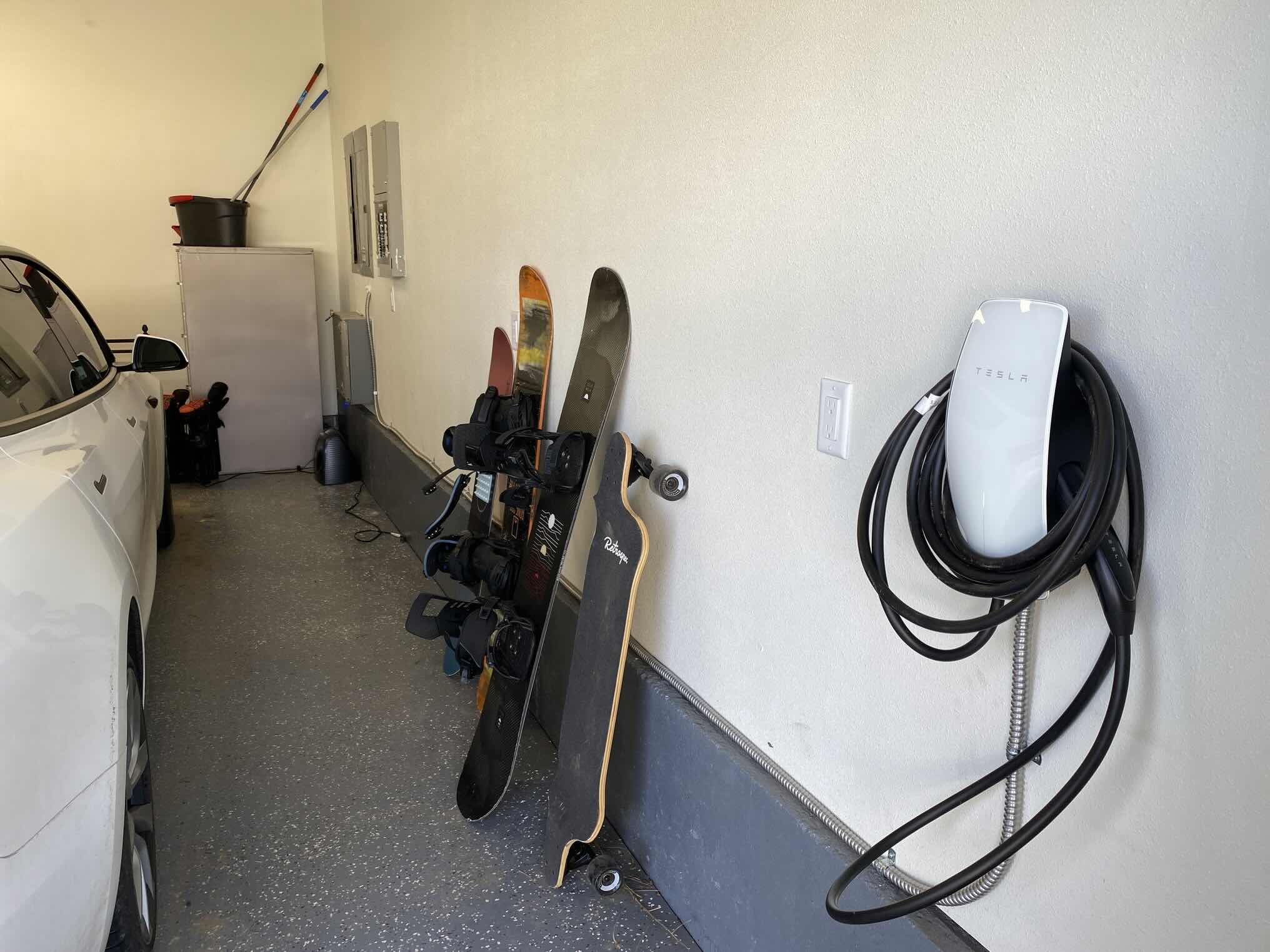
There are three types of EV chargers: Level 1, Level 2, and Level 3. And while all road-legal EVs can technically use each one (if you have the right adapter), not all EV chargers are equal. It’s important to know where they differ.
Especially if you’re deciding between installing one in your home or relying on public charging stations.
Level 1 EV Chargers – Inexpensive, But Slow
Level 1 EV chargers are the most basic ones you can find on the market. Their strength lies in their convenience.
Most EVs come with one included. The only installation they require is plugging them directly into a standard 120V household outlet. But the price you pay for convenience is the slowest charging speed of the three.
Specifications
- Voltage: 120V AC
- Power output: 1.4 – 1.9 kW
- Average charging speed: 3 – 5 miles per hour
- Time to full charge: 24 – 50 hours (depending on battery size)
- Equipment cost: $150 – $300
- Interface: Standard household outlet
- Installation requirement: None
Level 1 chargers rely on your vehicle’s built-in converter to change AC power to DC power, which is what slows the charging speed to a snail’s pace.
| PROS | CONS |
| No installation cost: There is no need for a dedicated electrical circuit so you can plug it into a regular wall outlet. | It takes days to fully charge your vehicle. |
| Portable and convenient for travel | Not suitable for 60 kWh battery packs or larger. |
These chargers are great for EV owners with a short commute, a plug-in hybrid, or who just keep one on them as an emergency solution.
Best for: EV owners with a shorter commute, plug-in hybrid vehicles, and emergency or temporary solutions when no other charging options are available.
Level 2 EV Chargers – The Common Home Option
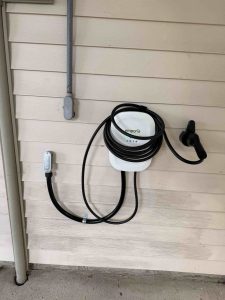
Level 2 EV Chargers are the best home charger solution. They offer a much faster charge rate (in some cases they’re 6 – 8 times faster) and some beneficial smart features.
Not only do they offer a quicker charge, but some come with smart features.
Specifications:
- Voltage: 208 – 240V AC
- Power output: 3.3 – 19.2 kW
- Average charging speed: 20 – 40 miles per hour
- Time to full charge: 4 – 10 hours
- Equipment cost: $300 – $2,000
- Interface: J1772 (Standard) or Tesla Adapter
- Installation requirement: Dedicated 240V circuit
Much like their convenient siblings, Level 2 chargers also rely on your vehicle’s onboard AC-to-DC conversion. However, they have a higher voltage, which significantly increases the charging speed.
| PROS | CONS |
| Fully charges most EVs overnight. | Not portable |
| Smart features (depending on which charger you purchase) Scheduled chargingEnergy usage monitoringLoad balancingSolar integration compatibility | You need to purchase extra equipment and hire professionals for installation and electrical upgrades. |
| AC fast charging. | Depending on your location, installation may require permits. |
| May require panel upgrades. |
Many EV owners consider level 2 chargers the perfect blend of speed, cost, and convenience. They’re especially great for those with a longer commute – if you remember to plug your car in the night before.
If you are considering upgrading, we can help you figure out what an EV charger installation may cost.
Level 3 EV Chargers – Fast, Public, and Costly
Level 3 chargers, better known as DC fast chargers, are the fastest EV charging option available. You rarely find one in a home, especially if the homeowner doesn’t have the necessary electrical infrastructure to support it.
Unlike Level 1 and 2 chargers, DC fast chargers convert AC power to DC power internally and deliver electricity to the vehicle’s battery directly.
Specifications
- Voltage: 480V+ DC
- Power output: 50 – 350kW
- Average charging speed: Can charge most EVs to 80% in 20 – 45 minutes (vehicle dependent)
- Time to full charge: 45+ minutes
- Equipment Cost: $8,500 – $50,000 (costs will vary with location)
- Interface: CCS, CHAdeMO, or NACS
- Installation requirement: High-voltage commercial infrastructure.
| PROS | CONS |
| Extremely fast charging. | Generates more heat compared to AC charging. Frequent use may accelerate battery aging. |
| Requires high-voltage, specialized infrastructure. | |
| Not suitable for home use. | |
| Very high equipment and installation costs. |
Given their speed and high-voltage, these chargers are better suited for long-distance travel stops than at-home charging.
If you’re planning to install a home EV charger, the MAS Pro team can review your setup, confirm the panel capacity, and complete a safe, code-compliant installation. Contact us today to schedule your consultation.