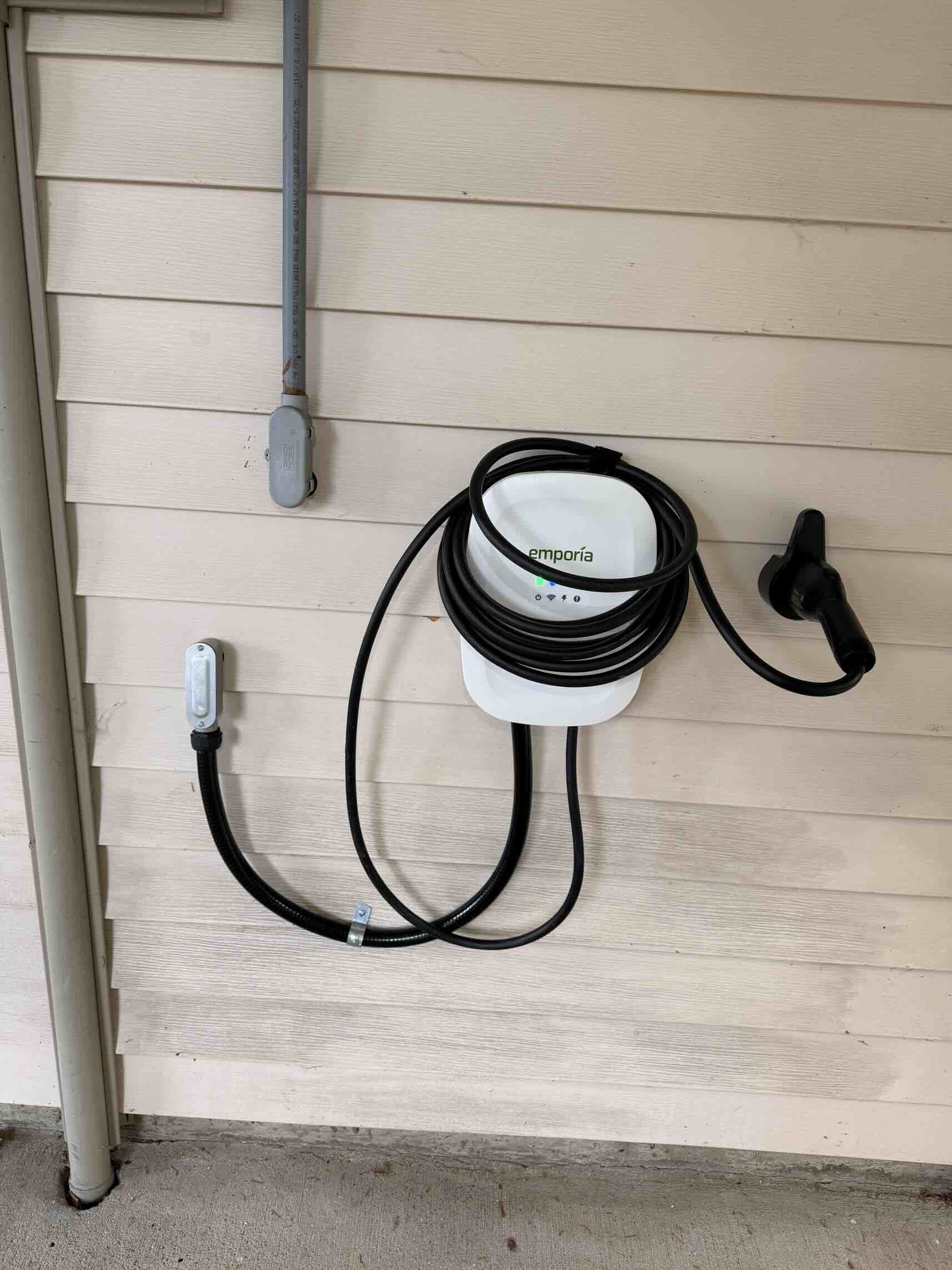
Electric vehicles are quickly becoming popular. With that growth comes an increased demand for chargers, leading many EV owners to wonder if they should install an EV charger in their home. They’re convenient and can even be cheaper than relying on public stations in the long run. There are a few things you need to know before installing one.
Can You Install an EV Charger in Your Home?
Before you even consider your budget or the type of charger you want, you need to figure out two things:
- Does your home have the electrical capacity for the charger?
- Do you need any permits or permission from an HOA or landlord?
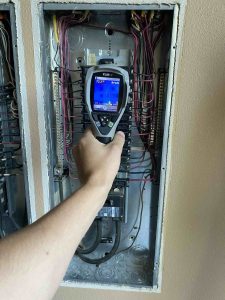
Electrical Requirements
- Amperage capacity – Most chargers designed to operate in homes need a dedicated 240V circuit – much like electric dryers and water heaters – with a 30 – 50 amp breaker.
A 100-amp main should be sufficient. However, if you’re hoping to expand in the future – or just want to install an EV that can handle a heavier load – upgrading to a 200-amp main would be ideal. - However, you should think about upgrading to a 200-amp main if you’re planning to buy another EV or just want to install an EV charger that can handle a heavier load.
- Residual-Current Device (RCD) type – To protect your charger – and EV – from any potential power surges you need to have a 20-milliamp Type A RCD installed in your fuse box.
They’re designed to detect AC and pulsating DC earth leakage currents. As a result, they cope better with a wider range of fault conditions and work best with newer and older charger models.
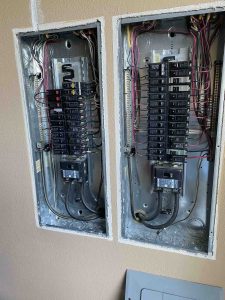
- Consumer Unit (fuse box) – Powerful chargers require dedicated RCDs, which isn’t always possible. If your fuse box cannot do this, you must either upgrade your consumer unit or add an additional one.
- Looped Supply (where applicable) – Some homes share an electricity service cable, which can limit your home’s electrical capacity and lead to overloading. Contact your distribution network operator so they can ensure the supply can handle the extra load or unloop it, which is usually the preferred option.
Skipping this step may have incredibly expensive consequences, so if you’re not sure where to start, reach out to the MAS Pro team – we’re happy to help.
Once you know your electrical system can handle your EV charger, it’s time to get approval from the necessary parties.
Permits, Regulations & Compliance
Depending on your location, your plans aren’t going anywhere without the proper permits and approval. This is how you can stay up to code:
- If you’re renting or living in an HOA-controlled space, ensure the necessary people have approved of the changes you’re making to your home.
- Research the specific regulations in your area.
- If necessary, apply for the permit and inspection to ensure you comply with building codes.
- Get your hands on a certificate of compliance.
Once you’ve got your permits and you know your house is up to code, it’s time to start thinking about budget.
How Much Will Installing an EV Charger Cost?
The first thing you need to consider is what kind of charger will suit your needs.
Types of EV Chargers
- Level 1 (120V) – The cheapest and slowest charger. It comes with the car. All you need to do is verify that the outlet circuit is safe. They’re great for keeping in your EV in case of emergency or if you’ve got a shorter commute.
- Level 2 (208 – 240V) – The most practical for daily use. A bit more costly on account of fees for installation, permits and potential electrical upgrades. Certain chargers come with smart features.
It usually charges an EV in about 4–10 hours (often overnight) – bigger batteries take longer.
For most homes, a professionally installed Level 2 charger ends up around $2,500 total (labor + materials + the charger). The final number can be lower or higher depending on your setup. - Level 3 (480V+) – Best option for commercial use, rarely used as an at-home charger. Requires high-voltage, and specialized infrastructure. Prolonged use of Level 3 chargers can be detrimental to your EV’s battery.
Ask yourself: How much am I travelling daily? How quickly do I need my EV to charge? What is my home’s electrical capacity? What’s my budget? That last one is particularly important.
Ongoing Costs & Maintenance
The major costs will happen with your initial purchase and installation of the EV charger, but there might be a few minor costs that crop up along the way – as often happens with technology that receives a lot of use.
Make sure you have the budget for maintenance – and a team you trust. MAS Pro has certified electricians who will inspect, test, and service all types of EV chargers to ensure safe, code-compliant, and long-lasting performance.
What is the Ideal Placement for Your Charger?
Now, you need to figure out where you’re going to put your charger.
Consider:
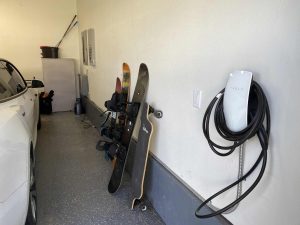
- Your primary parking spot – Your spot will always be the same, but the way you park probably won’t. Make sure that you can reach the charging port no matter how you park by ensuring the charging cable (typically 20 – 25 feet long) can reach all four possible configurations. This will also be very beneficial if you get a different model/brand of EV in the future.
Keep it out of the vehicle’s line of travel to avoid damage. - An EV charger regulated height – EV chargers are required to be mounted 36 – 48 inches from the ground.
- Working space around the mounting/outlet location – There should be a clearance of at least 30” wide, 36” deep and 78” high.
- Fuse box location – The further your fuse box is from your charger, the longer and more complex the wiring, which can be expensive.
- Smart Features – If you want to install a smart EV charger, you need to be in range of your home Wi-Fi. Or you need to make sure that you have a long enough Ethernet cable.
Can You Integrate Solar Power into Your EV Charger?
The short answer is yes. What you need to ask yourself is if you’re producing enough solar energy to cover your EV needs.
Fortunately, MAS Pro has developed a tool that will help you calculate whether your current solar setup will work for the EV charger you want to install in your home.
Common Mistakes & Pitfalls to Avoid
- Failing to obtain necessary permits – A permit is your shield from the law. Failure to obtain one can lead to fines, voided insurance coverage and warranties with the manufacturer. Save yourself the pain and get the permits you need.
- Miscalculating load capacity – At best, overestimating the electrical capacity of your home when installing an EV charger can lead to reduced charging speeds and constant breaker trips. At worst, it will cause physical damage to the components and can even be a fire hazard.
- Compromising an outdoor charger’s enclosure – Outdoor chargers’ enclosures are specifically designed for the elements, but if it’s not sealed properly – either by user error or because the electrician failed to stop-up any holes – rain, snow and insects will have no mercy on your charger.
- Fitting the wrong RCD Protection – Installing the wrong surge protection can be detrimental to both your charger and your car. Rather ensure your devices aren’t overloaded than deal with a fried EV.
- Taking risky shortcuts – Given how expensive it can be to install an EV charger, finding any way to cut costs can be tempting. But a battery on an EV is not something you want to risk damaging. It’s an expensive mistake and one that’ll leave you going nowhere fast.
Installing an EV charger at home is nothing to sneeze at, but with the right team backing you up, you should have no trouble setting up your dream EV charging station. MAS Pro has just the team for the job. We can review your setup, confirm your panel capacity, and install the charger safely and to code, just give us a call.