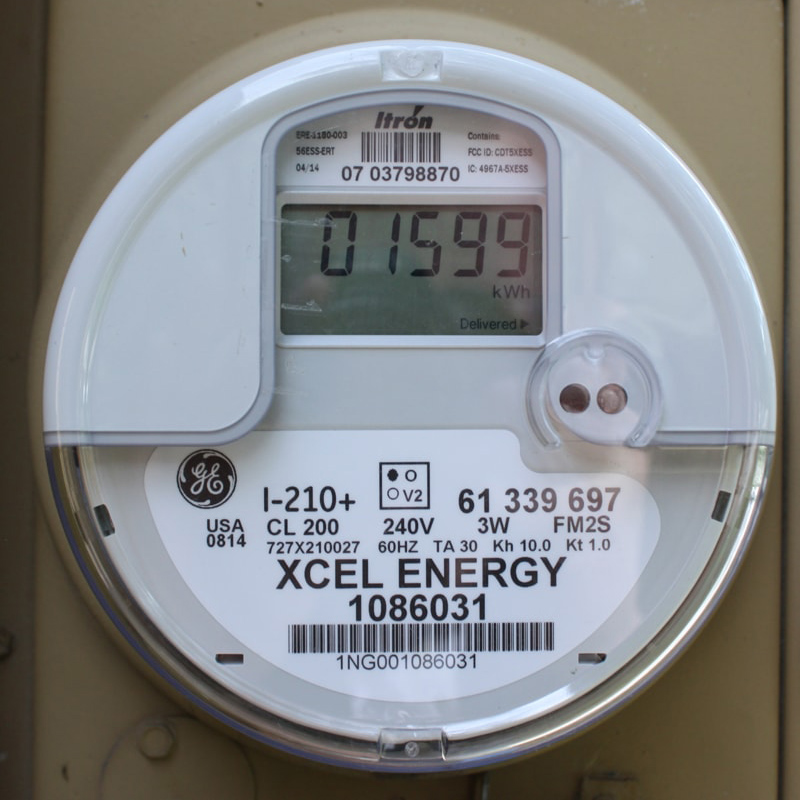
Your electric meter does more than sit on the side of your house, it measures the electricity you use, it affects how much you pay, and it can change how a solar system is sized and credited. Here’s a shorter, easy-to-read guide from Mas Pro that keeps the most useful parts of the original explanation.
What is an electric meter?
An electric meter (aka electricity or energy meter) records how much electricity a building consumes. Older mechanical meters only show total consumption between reads. Modern meters, especially smart meters, can record when you use electricity, how much you use at any moment, and even how much you send back to the grid.
Those extra insights enable new rate types:
- Time-of-use (TOU) rates: prices vary by when you use power (cheaper off-peak, pricier during peak hours).
- Demand charges: you pay based on the maximum power draw at any one time.
If your utility collects and shares detailed meter data, you can use it to shift usage and lower bills. Mas Pro can help you interpret that data in real time with our app and consultations.
Who owns the meter?
The utility owns and maintains the meter. Never tamper with it, it’s dangerous and illegal. Need the meter moved or changed? Contact your utility; they handle installations and swaps.
How does an electric meter work?
- Mechanical (analog) meters: a metal disc spins as current flows; the spinning moves dials that show total kilowatt-hours (kWh). A meter reader must record the dials (or you can read them yourself) to calculate usage between two readings.
- Digital meters: use sensors and electronics to measure voltage and current, then show readings on a screen. They’re more accurate and often transmit readings to the utility electronically.
- Smart meters: digital meters with communication chips. They automatically send frequent usage data to the utility (via cellular or radio) and often let you access that data through apps or portals.
If you install solar, the utility may swap your meter for one that can register power flow in both directions (so it can measure both consumption and exports).
Quick note: how to read a mechanical meter
Read the dials right-to-left. If a pointer rests exactly on a number, check the dial to its right to decide whether to record that number or the previous one. Because meters don’t reset, you compare two readings taken at different times to calculate usage.
What units does an electric meter measure?
Meters measure power in watts (W), but energy usage is watts over time: kilowatt-hours (kWh).
1 kilowatt-hour = 1,000 watts used for 1 hour.
Example: a 60-watt bulb on for 24 hours uses
60 × 24 = 1,440 watt-hours = 1.44 kWh.
How accurate are meters?
Meters are tested to accuracy standards. In the U.S., ANSI-based classes (0.1, 0.2, 0.5) indicate maximum error under test conditions (0.1% to 0.5%). If you suspect a meter problem, utilities can compare it to a check meter or send it to a lab; proven misregistration usually results in a refund for the affected period.
Should I worry about smart meter “radiation”?
Smart meters emit low-energy radiofrequency (RF) signals, similar to other household wireless devices. RF from smart meters is non-ionizing and, because meters are usually outside and often separated from living areas by walls, exposure levels are typically much lower than from mobile phones. Health agencies have found no convincing evidence that RF from smart meters causes cancer.
Net metering and solar
Net energy metering (NEM) credits you when your solar system produces more power than you consume: excess exports are fed to the grid and banked as credit. Your meter must measure electricity in both directions to support NEM. If your utility offers net metering or a similar net billing arrangement, it can materially improve the economics of going solar.
Time-of-use metering & saving strategies
With TOU rates, shifting energy use to off-peak hours (running laundry at night, charging an EV off-peak, etc.) can cut costs. Smart-meter data, lets you take advantage of lower-priced periods.
Can solar “slow down” the meter?
Yes. Producing your own electricity reduces what you draw from the grid, and with net metering you may even run the meter in reverse when you export excess power. That’s one of the most direct ways rooftop solar lowers utility bills.
Ready to Take Control of Your Energy Use?
Understanding your electric meter data can help you reduce your monthly bill, and determine whether solar power is the right investment for your home.
At Mas Pro, we help homeowners make smarter energy decisions. From solar installations to energy efficiency upgrades, our team can evaluate your electricity usage and recommend solutions that reduce your dependence on the grid and lower long-term energy costs.
Contact Mas Pro today to schedule a consultation!