Which one should you choose? What are the differences between the two?
Portable Generator
A portable generator is your less expensive and less permanent option. That also generally means less backup power, and it is not automatic.
What we mean by that is: with a portable generator, when power goes out, homeowners will need to go to their electrical panel and:
Turn off the main breaker
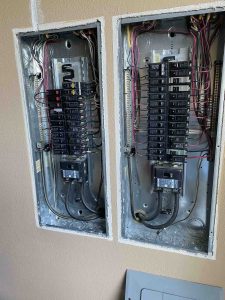
Turn on the generator breaker with an interlock kit installed (this ensures you cannot turn on the generator and backfeed the main power lines)
Then the homeowner will need to go outside, plug the generator into a generator inlet receptacle, and start the generator. This will power up your electrical panel and restore power to your home.
That said, portable generators are generally not meant to back up your entire home, so you will need to be cautious about load. You may have to turn off breakers that could overload your generator, such as:
Electric furnace
Heat pump
Range
Dryer
Portable generators can run on gasoline, natural gas, or propane. If you’re running off gasoline or a small propane tank, keep in mind you will have less run time. Once your fuel is out, the generator no longer runs.
It is often best to hook up to the home’s natural gas line or a large propane tank (120 gallons or larger) for longer run time.
Typical portable generator install cost: $1,500–$5,000, depending on the generator choice, fuel setup, and equipment location.
Typical install time: 2–5 hours.
We can usually give you a price range for this install over the phone and walk you through any questions.
Standby Generator
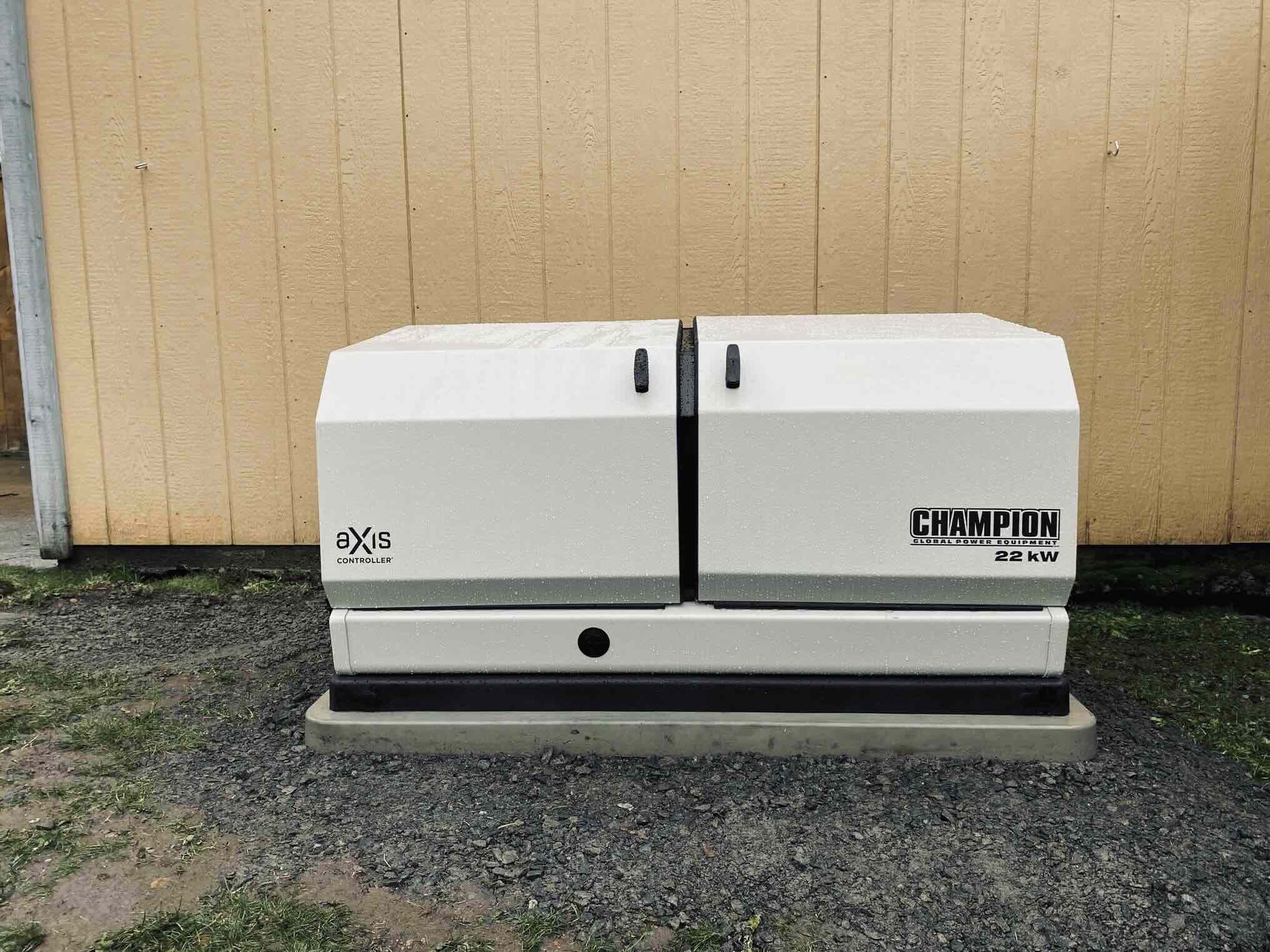
A standby generator is your permanent and automatic backup power option. A standby generator can back up your entire home automatically.
When the power goes out, the generator turns on automatically, often leaving you without power for no more than about 5 seconds—and you don’t have to do a thing.
A standby generator is integrated into your home’s electrical system, making it more permanent, and it can even increase your home value.
Standby generators also require more spacing around the unit for air intake and exhaust. Fuel options are typically natural gas or propane. It is usually best to hook up to the house natural gas line, or install a 250-gallon propane tank to fuel the generator.
Typical standby generator install cost: $10,000–$20,000, depending on the generator choice, fuel, and your home electrical system.
Typical install time: 2–7 days.
This option typically requires an onsite visit to provide accurate pricing.
Which one should you choose?
1) Budget
2) Ability and comfort
Are you able (and willing) to pull a heavy portable generator out of storage, set it up, plug it in, and start it?
Also consider the reality of doing this during a storm, in the dark, when the power is out. If you want backup power without the manual steps, a standby generator is usually the better choice.
3) What equipment needs to run
What are you trying to power in your home?
If you have essential or life-safety equipment that needs reliable power, a portable generator may not be the best option because it takes longer to set up and can have limited run time (especially if it’s running off a 5-gallon gas tank).
4) Preference and space
Do you have space for a standby generator outside your home?
A standby generator is a large permanent piece of equipment (often around 5 ft x 2 ft), and you may also need room for a propane tank if you don’t have natural gas. Some homeowners prefer the cleaner, automatic experience. Others don’t want permanent equipment outside or the added fuel storage.
Generator Services Available from Mas Pro
We help homeowners with:
Portable generator inlet + interlock kit installation (safe, code-compliant panel connection)
Standby generator installation with automatic transfer switch integration
Generator circuit planning and load calculations (so you don’t overload the system)
Fuel coordination guidance (natural gas or propane setups, clearances, and placement)
Electrical panel upgrades or corrections when needed for generator readiness
Troubleshooting and safety checks for existing generator hookups and transfer equipment
If you’re thinking about adding backup power to your home, Mas Pro is here to help you do it the right way. Contact us today for a free estimate!