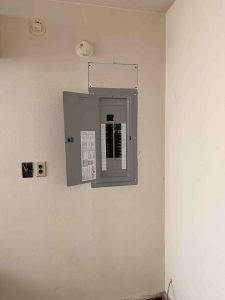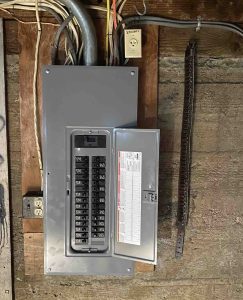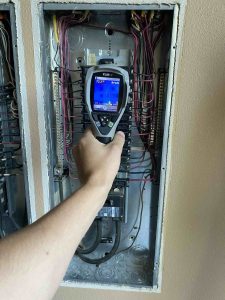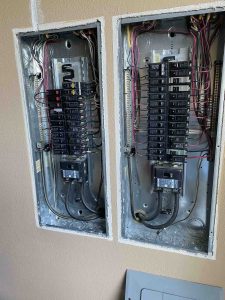
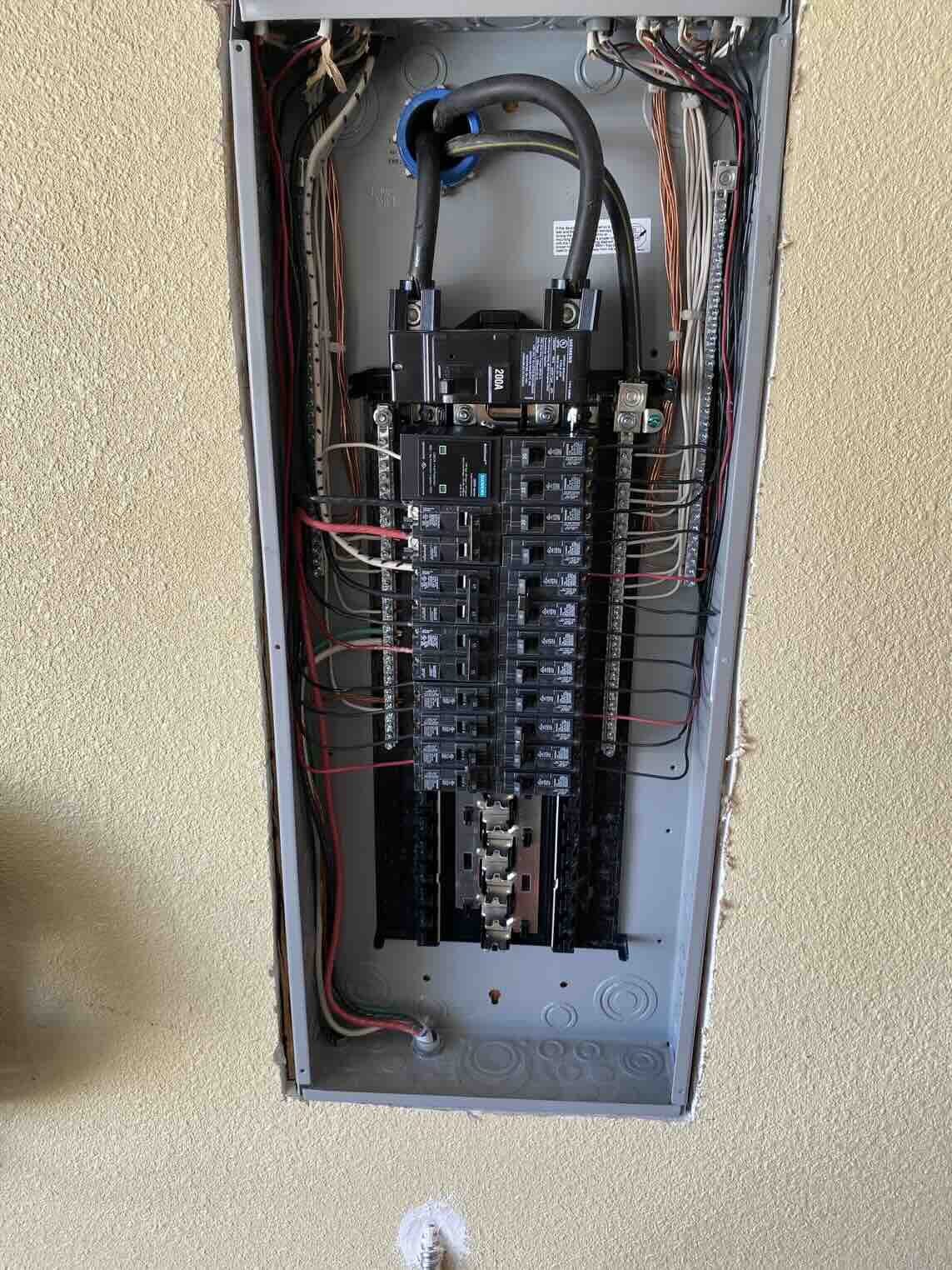
Understanding how your electrical panel works may help you recognize problems early, so that when issues arise, you have ample time to call a professional. Here’s what every homeowner should know.
Common Types of Electrical Panels Explained
While all electrical panels do the same job, they function slightly differently and can handle different loads:
- Main breaker panels – The most common type of electrical panels in homes today. They control the flow of power to the whole home through a combination of the main breaker and multiple circuit breakers.
- Main lug panels – These are secondary electrical panels that don’t contain main breakers. They distribute electricity to specific areas of a property and are shut down by primary panels further up the electrical circuit.
- Subpanels – These are secondary electrical panels that may contain a main breaker depending on your needs. They’re often installed in structures that are detached from your home to keep your system organized and prevent voltage drops.
- Load centers – These panels operate better in smaller structures. They contain main breakers and are safe, easy to reset, and code-compliant.
- Fuse boxes – These were once the standard electrical panels in homes, but became outdated because they were difficult to maintain. They contain fuses, which must be replaced once they are blown, instead of breakers.
- Transfer switch panels – These panels connect to the main electrical grid and an alternative power source to ensure there’s a constant flow of electricity through your home.
- Smart panels – These panels operate like standard electrical panels while allowing you to track your power usage.
How to Tell if Your Electrical Panel is Safe
Electrical panels are meant to last a long time, but occasionally they malfunction. Sometimes this is because of general wear and tear that can be repaired, other times it’s just because you’ve got a poorly designed panel.
Ask yourself:
- Is my panel up to code?
- Easily accessibleAway from any water sources or high moisture areas.Meets your amperage requirementsHas the correct breaker types and functions:
- AFCIs – Arc-Fault Circuit Interrupters.GFCIs – Ground-Fault Circuit Interrupters.
- Has the correct grounding and bonding principles
- Easily accessibleAway from any water sources or high moisture areas.Meets your amperage requirementsHas the correct breaker types and functions:
- Is my panel a known safety hazard, or has it been recalled?
Try these tests:
- Examine the panel box for damage that could be caused by overheating or moisture.
- Flip each breaker on and off to ensure they’re resetting properly.
Look out for signs of potential danger:
- Constant breaker trips and blown fuses
- Visible corrosion, rust, or water damage
- Humming, crackling, or buzzing sounds
- Flickering or dimming lights
- Odd smells or scorched outlets
- Older panel and home
- The panel is warm to the touch.
Electrical Panel Recalls Homeowners Should Know About
This electrical panel recall list highlights the panel types homeowners should know about when checking for known safety risks and outdated equipment.
Federal Pacific Electrical (FPE) Panels
While Federal Pacific Electrical panel was never recalled, an investigation by the CPSC (Consumer Product Safety Commission) revealed that a little over half of FPE’s Stab-Lok breakers didn’t trip when they were overloaded. This was followed by the news that FPE cheated during the UL (Underwriters Laboratory) certification process and, later, a class-action lawsuit.
Risks and Replacement Options
FPEs are so well known for being fire hazards due to the design flaws of their breakers that most insurance providers will not cover you if you have one installed in your home. Most electricians will recommend that you replace them for your own safety.
There are two possible replacement options:
- A complete panel upgrade and replacement with either Square D, Eaton (Cutler-Hammer), or Siemens panels (each of which is UL-listed).
- Retrofit your panel with new parts and convert it to a Bryant (BR) or Cutler-Hammer (CH).
It may be a bit costly, depending on the state of your wires and the location and code-compliance (or possible lack thereof) of your previous panel, but an upgrade will guarantee your home’s safety. It should also:
- Increase the capacity, reliability, and energy efficiency of your electrical panel
- Increase your property value
- Lead to reduced insurance premiums
- Future-proof your home
Zinsco/GTE-Sylvania
These panels were also never recalled despite their safety risks around their bus bars corroding easily and overheating so much that breakers melt into them.
Challenger
These panels were recalled in 1988 because of a detachable mechanical component that was causing overheating, and again in 2014 when easily accessible components on 1,000 panels proved to be shock risks.
Pushmatic & Wadsworth
While neither of these panels was hazardous when they were first manufactured, they are now. Both are outdated because they are no longer being manufactured – and neither are their parts – so they are not code-compliant.
Schneider Electric/Square D Panels
Between February 2020 and January 2022, all panels with a Square D label and a date code that fell between 194871 and 221343 were recalled because they had loose neutral screw connections that could overheat and cause a fire.
What to Ask Before Hiring an Electrician
- Are you licensed, bonded, and insured?
- Can you provide local references?
- Do you have any experience with projects like mine?
- Will you do the work, or do you use subcontractors?
- Are permits or inspections required?
- What is the project timeline?
- Is your work backed by a warranty?
- How do you price your work?
- What if the scope changes mid-project?
- What safety measures do you take?
- Do you know about local codes and rebates?
If you ever have concerns about your panel’s condition or capacity, contact MAS Pro, and we’ll send a team out to investigate your situation and advise you on the best course of action.