Skip to content
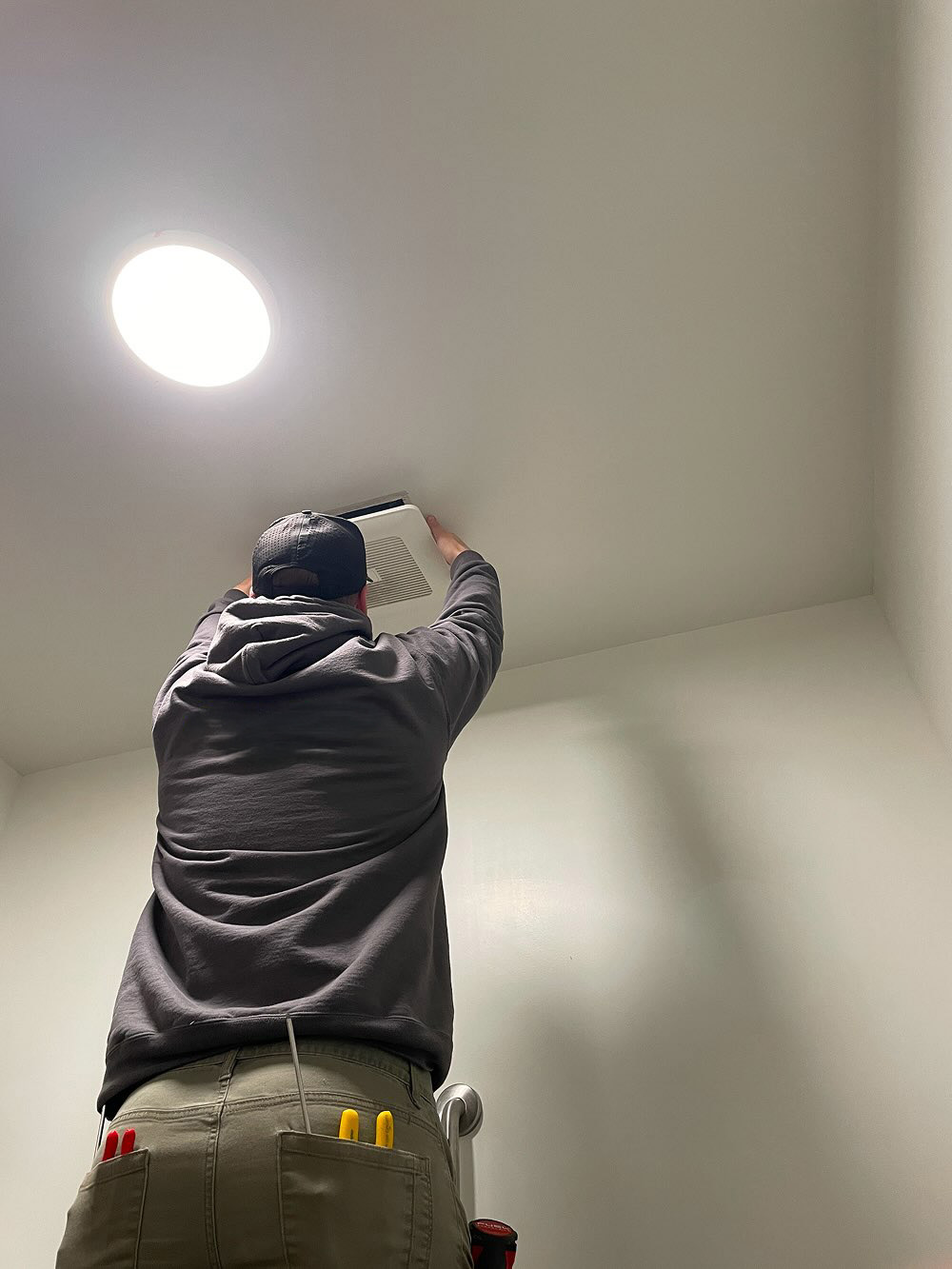
Ceiling fan installation is one of the most common electrical requests homeowners make, especially heading into summer. What looks like a simple swap can get complicated fast, depending on what is already in the ceiling and how your home is wired. Here is what to expect before you start, and when it makes sense to call a licensed electrician instead of doing it yourself.
Why Ceiling Fan Installation Is Not Always Straightforward
The most common issue in ceiling fan installation is the electrical box. Standard light fixture boxes are not rated to hold ceiling fans because they are heavier and produce vibrations that light boxes cannot safely handle. The National Electrical Code requires ceiling fans to be supported by a fan-rated outlet box that is listed and installed for that purpose. If the existing box in your ceiling is not rated for a fan, it has to be replaced before anything else happens.
Beyond the box, the wiring matters too. A basic light fixture typically runs a single hot wire, a neutral, and a ground. If you want independent control over the fan speed and the light kit, you either need to run a second wire from the switch location or you need a fan-rated remote or smart control that handles both functions over the existing wire. Many homes, particularly older homes, were not wired with a second switch conductor, so this is worth checking before you buy the fan.
What a Ceiling Fan Installation Actually Involves
It can take one to two hours to install a ceiling fan depending on the height of your ceilings and whether or not your home is already designed for ceiling fans.
Whoever is installing your fan will need to verify the box rating, confirm the wiring configuration, secure the mounting bracket, assemble and hang the fan motor, connect the wiring correctly, attach the blades, and test the unit.
Rooms without any existing ceiling fixtures need to have new wiring run from a switch location to the ceiling. That is a more involved job that typically includes cutting into drywall, fishing wire through the wall and ceiling cavity, and installing a new switch. It is fully doable, but it is the kind of work that needs a licensed electrician to do correctly and to pull the appropriate permit if required in your jurisdiction.
What Does Ceiling Fan Installation Cost?
Much like the timeline, the cost will depend on the complexity of the installation, the height of your ceilings, and whether the wiring needed for a ceiling fan is already installed. Getting everything done by professionals typically costs between $150 and $400.
Some homeowners try to reduce cost by purchasing the fan and having an electrician handle only the wiring portion. That works fine as long as the fan you buy is appropriate for the room size and ceiling height, and you already have a fan-rated box before the electrician arrives.
When to Call an Electrician for Ceiling Fan Installation
You should call a licensed electrician for ceiling fan installation if the existing box is not fan-rated, you need new wiring because there is no existing ceiling fixture, the ceiling is vaulted or high enough to require scaffolding or a specialty ladder, or the room has older wiring.
Aluminum wiring, knob-and-tube wiring, or wiring that has been modified by previous owners all qualify as situations where you should not touch anything until you can get a professional set of eyes to take a look and ensure everything is safe.
Another reason to call a professional rather than DIY is ensuring the electrical connections are made correctly. Ceiling fans operate for long periods and generate vibration, which makes secure electrical connections especially important. Loose wire connections can create heat over time and increase fire risk. Getting the ceiling fan installation done correctly the first time means not having to think about it again.
Ceiling Fan Placement and Room Size
A ceiling fan’s blade span should match the room size for the fan to move air effectively. A fan in the 42 to 48-inch range works well for rooms up to about 175 square feet. Rooms between 175 and 350 square feet generally do best with a 52-inch fan, and larger open spaces may need a 60-inch fan or multiple units. Mounting height also matters. The blades should sit at least seven feet above the floor for safety, and eight to nine feet is the recommended height for efficient airflow. In rooms with ceilings over nine feet, a downrod extension is typically needed to bring the fan down to the right operating height.
What About Smart Fans and Remote Controls?
Many newer ceiling fans include built-in receivers that allow control via a remote or a smart home app. These are particularly useful in rooms that only have a single-wire switch configuration because the remote handles the speed and light functions without requiring a second wire. The receiver installs inside the fan canopy and communicates with the wall remote or smart device. If you are considering this route, confirm that the fan you choose includes a compatible receiver and that the receiver supports the control features you want before purchasing.
Many smart fan controls require a neutral wire at the switch location (though requirements vary by manufacturer), which older homes often do not have. Your electrician can confirm what is present before you commit to a specific control setup.
If you’re looking to install a few ceiling fans around your home to stay comfortable over summer in Clark County, WA, MAS Pro has your back. Contact us for a free estimate.
Sources
Nassau National Cable. “A Complete Guide to NEC Article 314 on Electrical Boxes and Conduit Bodies” https://nassaunationalcable.com/blogs/blog/a-complete-guide-to-nec-article-314-on-electrical-boxes-and-conduit-bodies?srsltid=AfmBOord7MbE0TZmCK6-CBad2acNdxJDlJyv7pTdJvvAxt4N6d8BS5oP
Energy Star. “Ceiling Fan Basics: Choosing the Right Size Guide” https://www.energystar.gov/products/ceiling_fans/ceiling_fan_basics
HomeAdvisor. “How Much Does it Cost to Install a Ceiling Fan in 2026” https://www.homeadvisor.com/cost/heating-and-cooling/install-a-ceiling-fan/