Skip to content
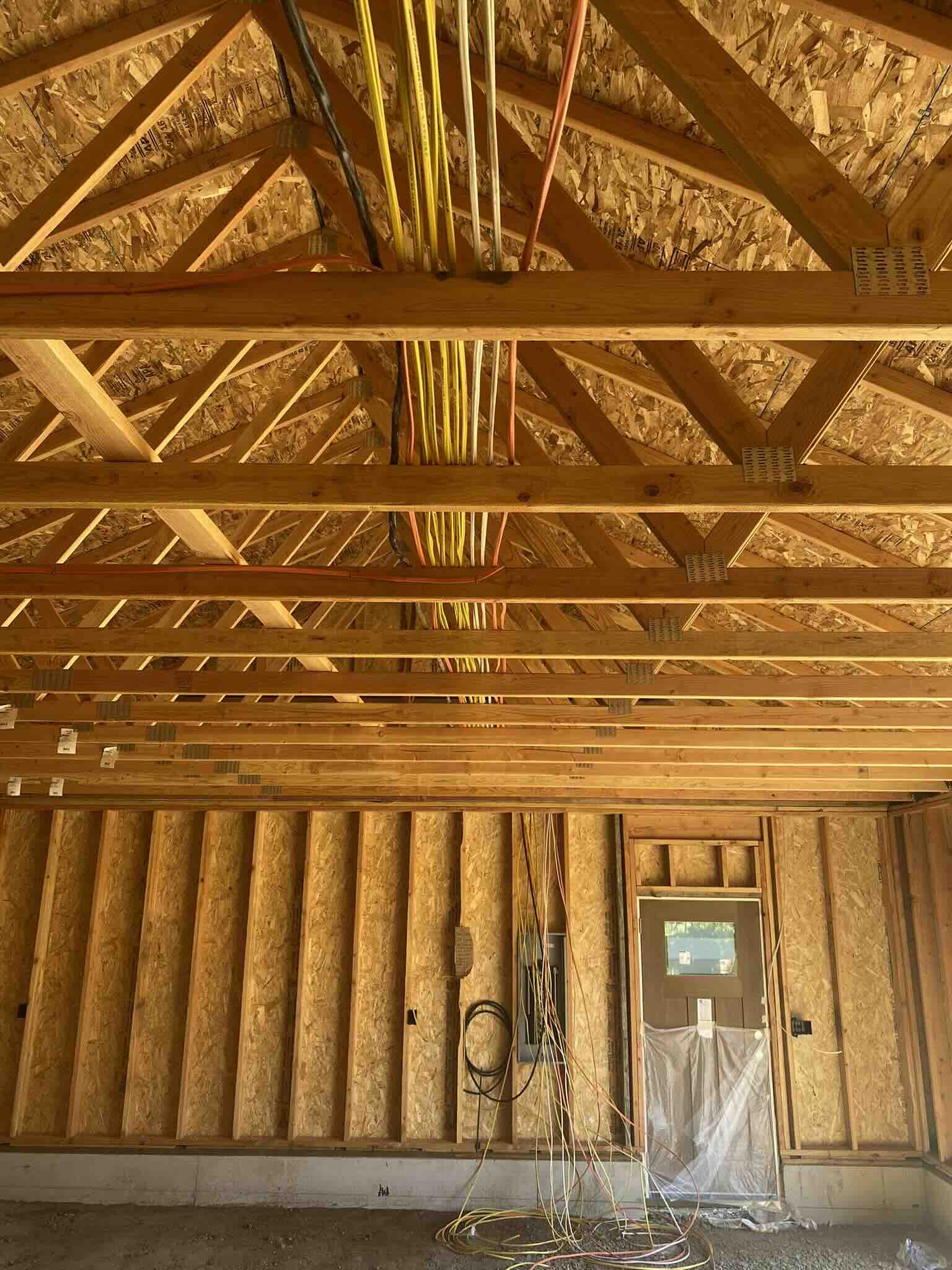
If you are building a new home in Clark County or finishing a space from scratch, the decisions you make before the drywall goes up will determine how comfortable that home will feel for years to come. Careful new construction wiring planning ensures your outlets, switches, lighting, and future electrical needs are accounted for before the walls are closed.
Why Electrical Planning Matters
Most homeowners focus on finish materials like flooring, cabinets, and countertops, and assume the electrical layout is something the contractor handles automatically. A good electrician will wire your home to code. A great electrician walks you through the decisions code doesn’t require but that you’ll wish you had made once you are living in the space.
The window to make those decisions cheaply is before drywall. After that, any additions mean cutting drywall, fishing wire through finished walls, patching, and repainting.
The Most Common Change Orders After Plans Are Drawn
Even with careful planning, many homeowners do not realize what they want until they walk through the framed space. By that point, even small changes can add cost and delay.
The most common electrical change orders include:
- Adding outlets in garages, workshops, and outdoor living spaces
- Moving or adding switch locations based on actual traffic flow
- Upgrading more fan-rated boxes
- Adding extra bedroom outlets or larger two-gang boxes at the bedsides
- Installing USB/USB-C receptacles in key charging locations
- Pre-wiring for future EV chargers, hot tubs, or detached buildings.
The pattern across nearly all of these change orders is the same. They are small, inexpensive additions when caught during framing and rough-in, and they become a separate service call, often with drywall repair, if they come up after the home is finished.
What to Consider When Planning Your Outlet and Switch Wiring
During the new construction wiring phase, it is important to think beyond basic code requirements and consider convenience, functionality, and future upgrades.
Three-way and Four-way Switches
Three-way switches allow two switches to control the same light, while four-way switches add a third control point. They make it easier to control lighting from multiple locations and are especially useful in hallways, stairwells, open-concept living areas, and garages with more than one entry door.
Fan-Rated Boxes
If there’s any chance you’ll want a ceiling fan in the future, ask for a fan-rated box instead of a standard light box. Fan-rated boxes are designed to support the weight and vibration of a ceiling fan and cost very little extra during rough-in. They are a smart addition in bedrooms, living rooms, and dining rooms where ceiling fans may eventually be installed.
Bedroom Outlets
Building codes have a minimum requirement for the number of outlets in a bedroom, but most people need more.
Upgrading bedside locations from a single-gang box to a two-gang box creates additional outlets for phones, tablets, lamps, and other devices with minimal added cost during construction.
Wall Sconces Instead of Lamps
Some homeowners prefer wall-mounted reading sconces instead of bedside lamps. A sconce above each side of the bed frees up nightstand space and keeps cords off the floor.
Sconces need to be wired in before drywall. You need a box in the wall at the right height, typically 60 to 70 inches from the floor, with a switch leg run to wherever you want the control. This is a five-minute rough-in task and a significant drywall job after the walls are closed.
Closet Outlets
Closet receptacles are not typically required by code, but they can be useful for charging cordless vacuums, robot vacuums, and other devices. Because they are inexpensive to install during rough-in, many homeowners choose to add them while the walls are still open.
Switched Outdoor Outlets
The feature most homeowners wish they had planned for is a switched outdoor outlet, a plug in the eaves or on the exterior wall controlled by a dedicated switch inside the house.
This is especially useful for holiday lights, patio string lights, and other decorative lighting. Since the wiring is installed during rough-in, planning ahead is much easier and less expensive than adding the feature after construction is complete.
Smart Switches
Most smart switch systems work as drop-in replacements for standard switches in existing boxes. You do not need to do anything special during rough-in to prepare for them. At trim-out, you buy the switch, install it in the same box, pair it with your home automation app, and you have voice control and remote access.
One of the few exceptions is three-way smart switch setups, which use slightly different wiring depending on the brand. If you plan to use smart switches on a three-way circuit, mention that during rough-in so the correct wiring method is used.
Wiring Features Most Homeowners Never Think to Ask For
Beyond the basics above, there are a handful of small additions that almost never come up unless someone brings them up first. These are the details that separate a house wired strictly to code from a house wired for how people actually live in it.
Consider placing a switch within reach of every exterior entry door so you’re never walking into a dark house with your hands full. In large open-concept rooms, floor outlets can provide power for lamps, powered recliners, or seasonal décor without extension cords running across the floor.
If you’re planning a wall-mounted TV, a dedicated receptacle and low-voltage box behind the television can keep power and data cables hidden. Counter-height outlets in garages, mudrooms, and laundry rooms are also useful for charging tools and powering small appliances where they’re used.
Finally, think about future needs. A dedicated garage circuit or conduit for a future EV charger, hot tub, sauna, or detached shop is often inexpensive during construction and much more costly to add later.
Pre-Drywall Checklist
Before drywall is installed, reviewing your new construction wiring plan can help you catch missed opportunities that would be expensive to add later:
- Do all hallways have three-way switches at both ends?
- Do large open areas have three-way or four-way coverage at every entry and exit point?
- Are ceiling boxes in rooms where you might want a fan-rated box for future fan installation?
- Does each side of every bedroom have a two-gang outlet box?
- If you want wall sconces in the bedroom, are boxes roughed in at the correct height?
- Does each closet have at least one outlet?
- Is there a switched outlet circuit in the eaves for holiday lighting?
- Is there a switched outdoor outlet for patio or string lighting?
- Is there a switch for outdoor lights on both sides of your main exterior doors?
- Are USB outlets planned for nightstands, desks, and kitchen counters?
- Is there a dedicated circuit or conduit run for a future EV charger, hot tub, or outbuilding?
These items cost a fraction of what they would when added after finish work. A brief conversation with your new construction electrician during the rough-in stage means just a few extra minutes of work rather than a full-day retrofit.
MAS Pro is a licensed electrical, plumbing, and HVAC contractor serving Vancouver, WA and surrounding Clark County communities including Battle Ground, Brush Prairie, Ridgefield, Camas, Washougal, La Center, Yacolt, and the Cowlitz County markets of Woodland, Kalama, and Longview.
If you are wiring a new home, finishing a basement, or adding a detached structure, we can walk the space with you during the planning phase and make sure the rough-in decisions match how you are going to live in it. Give us a call.
Frequently Asked Questions
At rough-in, installing a fan-rated box typically costs between $150 and $300, while installing a standard box can cost between $120 and $160.
Yes. A three-way circuit uses a three conductor cable between the two switch locations rather than the standard two conductor cable. This needs to be planned during rough-in. You cannot simply swap single pole switches for three-way switches after the fact without running new wire.
In most cases, yes. Standard smart switches replace standard switches in the same box using the same wiring. Some brands require a neutral wire at the switch location, which older homes may not have. Homes built to current code typically have neutral wires at switch locations, making retrofits straightforward.
No. Washington State electrical code does not require a receptacle outlet in closets. It also does not prohibit them, and adding one at rough-in is inexpensive.
A common starting point is 60 to 70 inches from the finished floor. Your electrician can help you think through the placement based on your bed frame and mattress before the box is set.
Running conduit from the panel to the garage during rough-in is one of the least expensive additions on this list. Adding the same conduit run after the home is finished often means opening walls, cutting concrete, or running conduit on the exterior of the home, all of which add significant cost.