Skip to content
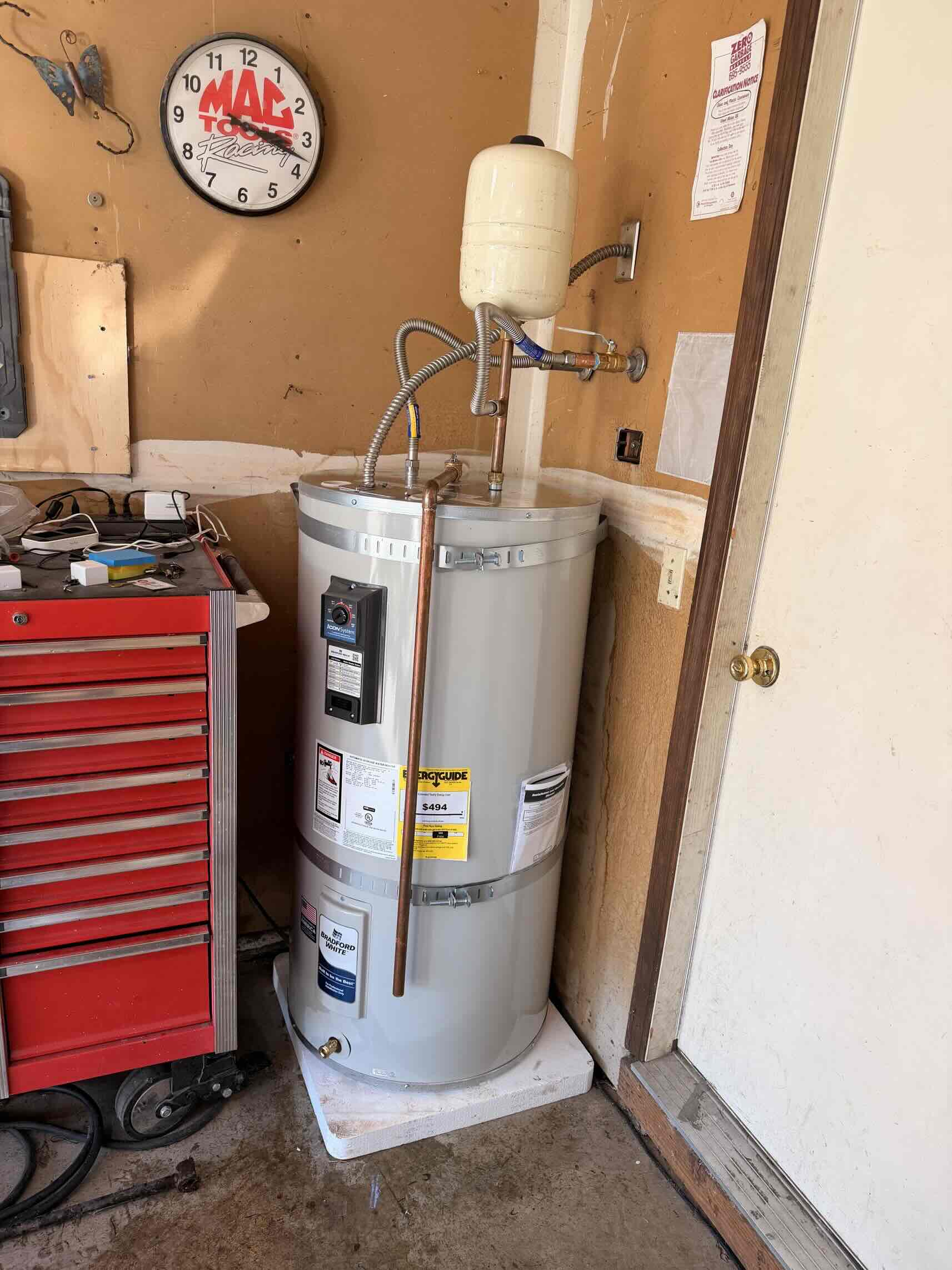
How long do water heaters typically last? That depends largely on the type of heater, maintenance, and water quality. Understanding your water heater’s expected lifespan gives you time to plan a replacement rather than wait for an emergency situation to strike.
Average Lifespan by Type
A water heater’s typical lifespan depends on water quality, maintenance, usage, installation, and equipment quality. A neglected unit exposed to hard water can fail years early, while a well-maintained one can outlast its range.
| Type | Typical lifespan | Notes |
|---|---|---|
| Electric storage tank | 10 to 15 years | Heating elements are replaceable, which can make some repairs straightforward |
| Gas storage tank | 8 to 12 years | Burner and venting add wear over time |
| Tankless (on-demand) | 15 to 20+ years | Longest lasting; many parts are serviceable |
| Heat pump (hybrid) | 10 to 15 years | Highly efficient and can significantly reduce water-heating energy use |
Table 1. How long water heaters last by type.
How to Tell How Old Your Water Heater Is
If you did not install it, you can usually date the unit from the serial number on the rating label. Most manufacturers encode the date of manufacture in the first few characters of the serial number, often as a letter for the month and two digits for the year, or two digits for the year followed by the week. Conventions vary by brand, so if the code is not obvious, search the manufacturer name together with “serial number age,” or ask our team and we can read it for you. Knowing the true age of your unit helps you understand how long water heaters last and where yours falls within that expected lifespan. That makes it easier to plan a replacement before the unit fails.
What Shortens a Water Heater’s Lifespan
There are several factors that can shorten a water heater’s lifespan significantly. Fortunately, they can be dealt with through proper installation and basic maintenance.
- Hard-water scale and sediment are major problems in areas with higher mineral content.
- Deferred maintenance (failing to flush the tank or replace a depleted sacrificial node), can allow sediment and corrosion to damage the tank.
- A thermostat set too high accelerates scale formation and stresses components. Around 120°F balances hot-water needs, energy use and scald protection.
- High water pressure above roughly 80 psi strains the tank, fittings, and temperature-and-pressure (T&P) relief valve. A pressure-reducing valve protects the entire home.
- A closed plumbing system needs an expansion tank or another approved method of controlling thermal expansion.
- Poor installation such as loose fittings, inadequate venting, or a missing expansion tank can cut years off an otherwise sound unit.
How to Get More Years Out of Yours
Simple maintenance can help extend a water heater’s lifespan and reduce premature failures.
- Flush the tank periodically to remove sediment, following the manufacturer’s recommendations. In areas with higher mineral content, more frequent maintenance may be beneficial.
- Inspect the anode rod periodically and replace it before it is fully consumed to keep the tank protected.
- Keep the thermostat near 120°F. It is efficient, safer, and gentler on the tank and its components.
- If your home has a closed plumbing system because of a backflow preventer, check valve, or other device that prevents pressure from flowing back into the water main, an expansion tank may be required.
- Manage water pressure and hardness with a pressure-reducing valve and, where appropriate, a softener or scale-reduction system.
Should You Replace Before It Fails?
If your unit is nearing the end of its expected lifespan and showing signs of failure, you need to start considering replacement. Not only can this save you from potential water damage, but you won’t have the pressure of an emergency forcing your decision. You can investigate units and any available rebates before scheduling the work.
When you’re ready to replace your water heater, the MAS Pro team can help you choose and install the right unit for your home. Contact us to discuss replacement options and schedule an installation