Skip to content

Summer in Ridgefield isn’t the same as it was ten years ago. The 2021 heat dome pushed temperatures above 110°F across Clark County, and the National Weather Service in Portland has logged steadily hotter Julys since. If your air conditioner struggled last August, it will struggle worse this year. The fix is catching the warning signs in spring while parts are in stock and HVAC schedules are still open.
Quick Facts for Ridgefield Homeowners
- Average AC repair cost in Ridgefield, WA: $150 to $650 depending on the part
- Typical lifespan of a residential AC unit: 12 to 15 years in the Pacific Northwest climate
- Permit needed? Repairs no. Replacements and new installs yes, through Clark County Community Development.
- Refrigerant rule change: R-410A is being phased out as of 2025. New systems use R-454B or R-32.
- Average summer humidity in Ridgefield: 60 to 75 percent. Your AC has to dehumidify, not just cool.
10 Warning Signs Your AC Needs Service
Most AC failures give you weeks of warning before they quit on a 95-degree afternoon. Here is what to watch for, what it usually means, and whether you can wait or need a call today.
Warm Air Coming From the Vents
You set the thermostat to 70 and the air feels lukewarm. This is the most common call we get in June and July across Ridgefield. The cause is almost always one of three things: a low refrigerant charge from a slow leak, a failing compressor, or a frozen evaporator coil from a dirty filter. Replace the filter first. If it does not improve within an hour, shut the system off and call a tech. Running an undercharged system burns out the compressor, which is the single most expensive part on the unit.
Weak Airflow at the Registers
Hold your hand to a supply vent. If you barely feel movement, the air handler is not pushing enough volume. The usual culprits are a clogged filter, a failing blower motor capacitor, or restricted ductwork. In older Ridgefield homes north of Pioneer Street and in the original townsite, undersized or partially collapsed ducts are common. We see this often in houses where a second story or addition was added without resizing the duct trunk.
Thermostat Not Responding
Before assuming the AC is broken, swap the thermostat batteries and check the breaker. A surprising number of service calls are actually thermostat wiring issues, especially after a homeowner installs a smart thermostat without a C-wire. If the display is blank or the system short-cycles every few minutes, the thermostat or its low-voltage wiring is the problem, not the condenser outside.
Loud or Unusual Noises
A healthy condenser hums. Grinding usually means a motor bearing. Banging or clanking points to a loose connecting rod or piston in the compressor. Hissing or bubbling almost always means a refrigerant leak. Screeching on older belt-driven units means the belt is slipping or about to snap. None of these get better on their own. Shut the system off and call.
Strange Smells From the Registers
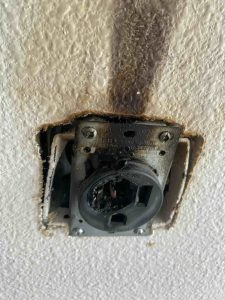
A burning smell usually means melted wire insulation, which is a fire risk. Shut the breaker off immediately. A musty or moldy smell means moisture is sitting somewhere in the system, often in the drain pan or on the evaporator coil. Given how close Ridgefield sits to the Lake River bottoms and the Ridgefield National Wildlife Refuge, ambient humidity runs higher than inland parts of Clark County. Mold growth in older systems is common here and can affect indoor air quality, especially for kids or anyone with asthma.
The Air Feels Sticky Indoors
Your AC has two jobs: cool the air and pull moisture out of it. When the second job stops working, the house feels clammy even at 72 degrees. This usually points to an oversized unit short-cycling, a failing blower running too fast, or a low refrigerant charge. Summer humidity in Ridgefield averages 60 to 75 percent, so a properly sized system should bring indoor humidity down to around 45 to 50 percent.
Water or Ice Around the Indoor Unit
Ice on the copper refrigerant line means the coil is frozen, usually from low refrigerant or restricted airflow. Water pooling under the air handler typically means a clogged condensate drain. That drain line runs from the indoor coil to a floor drain or outside. In our climate, those lines clog with algae faster than in drier regions. If you see active dripping into a ceiling or wall, shut the system off to prevent water damage and call right away.
Power Bill Spiked Without Explanation
Pull up your Clark Public Utilities account and compare this month against the same month last year. A 30 to 50 percent jump with no rate change usually means the AC is working much harder than it should. Common reasons include a dirty condenser coil, low refrigerant, a failing capacitor, or duct leakage in the crawlspace or attic. Many older homes lose 20 to 30 percent of their conditioned air through duct leaks before it ever reaches a register.
It Breaks Down Every Summer
If you call for repair more than once a season, the math usually favors replacement. A general guideline: if the repair quote is more than 50 percent of replacement cost and the unit is over 10 years old, replace it. New systems using R-454B refrigerant are also 15 to 25 percent more efficient than R-410A units from a decade ago, and Clark Public Utilities rebates can offset part of the cost when you upgrade to a qualifying heat pump.
Your AC Is 10 Years Old or Older
Every mechanical system has a lifespan. Standard residential AC units last 12 to 15 years in this climate, sometimes longer with regular maintenance, sometimes less without it. Once you cross the 10-year mark and start seeing repair calls stack up, it is worth getting a replacement quote alongside the next repair quote so you can compare. A ductless mini-split is often a better fit for older Ridgefield homes that never had proper ductwork.
What to Do Before You Call
Two free checks save a service call about a third of the time. First, replace the air filter. A clogged filter is the single most common cause of weak airflow, frozen coils, and warm air at the vents. Second, check the breaker panel for the AC circuit. If it tripped, reset it once. If it trips again, stop and call. Repeated tripping points to a short, a failing capacitor, or a compressor pulling too much amperage, and continuing to reset it can cause real electrical damage.
If the issue persists, get a licensed technician out before the first heat wave. June and July booking windows in Clark County typically stretch to two weeks once temperatures hit the 90s.
Permits and Local Code in Ridgefield
For straightforward repairs, no permit is required. Replacing a condenser, installing a new system, or running new refrigerant lines does require a mechanical permit through Clark County Community Development. Ridgefield falls under Clark County’s permitting authority for mechanical work. The state of Washington also requires that anyone installing or servicing HVAC equipment hold a current contractor registration with Washington L&I. Always verify before hiring. We cover this in more detail in our guide on how to verify a contractor’s license.
How MAS Pro Service Approaches AC Repair
We are a licensed electrical, plumbing, and HVAC contractor serving Ridgefield and the surrounding Clark County area. Every diagnostic includes a refrigerant pressure check, capacitor and contactor test, blower amperage reading, and a visual on the evaporator coil and drain line. You get a written quote before any work starts, and we explain what is failing and why in plain language. If your system is beyond economical repair, we will say so rather than chase parts on a unit at the end of its life.
Need AC Repair in Ridgefield?
Schedule a diagnostic with a licensed MAS Pro technician before the first heat wave.
Book a Repair VisitRelated Reading
Common HVAC Problems and What You Can Do | What Are the Negatives of HVAC? | What’s a Mini Split and Why It’s a Smart Move | Advantages of HVAC Scheduled Maintenance