Skip to content
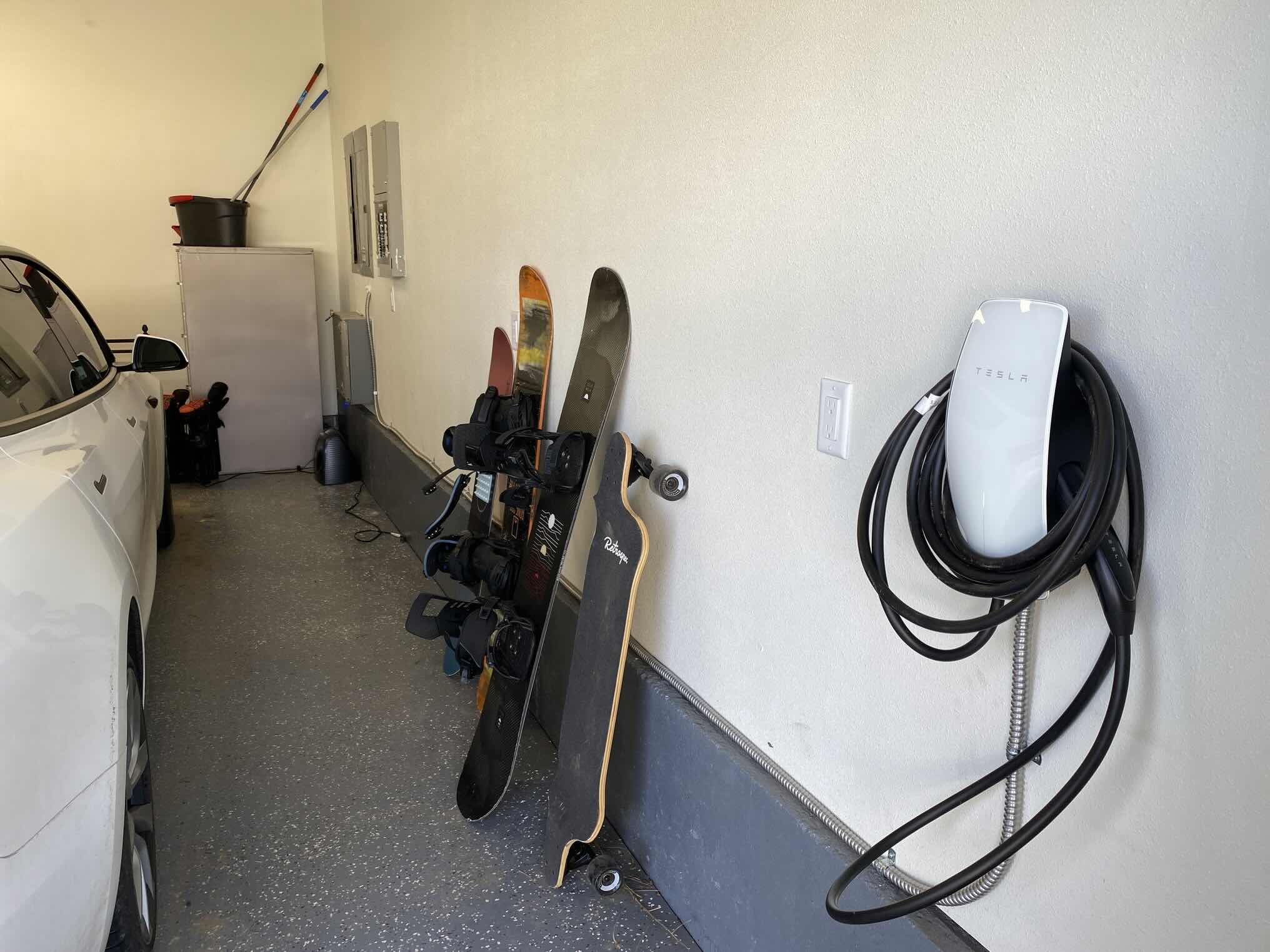
Ridgefield, WA has been growing at an exponential rate and doesn’t feel like it’s going to stop anytime soon. That growth has led many folks to seek out cost-effective, sustainable methods of transportation, the most notable of which has been switching to electric vehicles. There are many benefits to such a switch, and if you’re considering jumping on the EV trend, there are a few things you need to know before installing an EV charger in your home.
1. Does Your Home – and Neighborhood – Have the Electrical Capacity for an EV Charger?
Level 2 EV chargers require two empty slots in your electrical panel and 40 to 48 amps to operate at maximum capacity, meaning your circuit breaker needs to have a capacity of at least 50 to 60 amps. If you live in a newer home, your electrical capacity shouldn’t be an issue, as most are fitted with 200-amp electrical panels – more than enough for your home to run smoothly while your EV is charging.
Older homes shouldn’t have any issue handling most Level 2 EV chargers, but because they are usually fitted with 60- to 100-amp electrical panels, the amount of power your charger can draw from the grid is limited. You’d only need an upgrade if your home can’t handle running your charger and other load-heavy appliances simultaneously or if you want to add another EV charger to your home in the future.
In Ridgefield, your electrical grid should have no trouble handling the load of an additional EV charger. Clark Public Utilities has spent the last few years updating the city’s electrical infrastructure as more folks adopt EVs.
2. Where Are You Going to Put Your EV Charger?
The location of your EV charger can have a massive impact on the cost of the installation. You’ll need to determine whether you want it inside or outside (we recommend placing it wherever you find yourself parking the most) and how far your intended spot is from your electrical panel.
The complexity of the route the cables need to take from your electrical panel to your charger is the main factor in costs, as it will affect:
- The length and gauge of your cables
- Labor costs
3. Local Codes and Permits
This should be one of the first few things you check before moving forward with an installation.
You’ll need a permit if:
- You’re installing a hardwired Level 2 EV charger – These connect directly to your electrical panel. A permit will keep any installation in compliance with the National Electrical Code (NEC) and protect your home insurance coverage and property value.
- You’ve purchased (or are planning to purchase) a plug-in charger – You’ll need to install a dedicated 240V circuit if you don’t have one already.
- You’re making structural changes to accommodate your charger – You need to get permission from the city before you start altering your home to ensure that it remains up to code with any of the changes you make and doesn’t decrease in value. Permits are necessary for protecting your home insurance coverage, if applicable, and assign responsibility to the installer to ensure that the work is done properly.
Depending on the scope of your project, a permit can cost anywhere from $50 to $200.
4. What Rebates Does Your Local Government Offer?
Clark Public Utilities offers several incentives to those planning to purchase an EV and install a charger:
- Low-income residents can receive a $2,000 rebate on a used EV that costs less than $20,000 and is registered in Clark County.
- $100 to $500 rebates are offered for the purchase and installation of Level 2 EV chargers.
- Higher rebates are available for ENERGY STAR-certified chargers with smart features.
5. Are There Any Electricians Near You Who Can Help?
Ridgefield, WA residents have the added advantage of being in MAS Pro’s service area, so feel free to contact us with any of your EV charger installation needs, and we’ll send someone over to help.