Skip to content
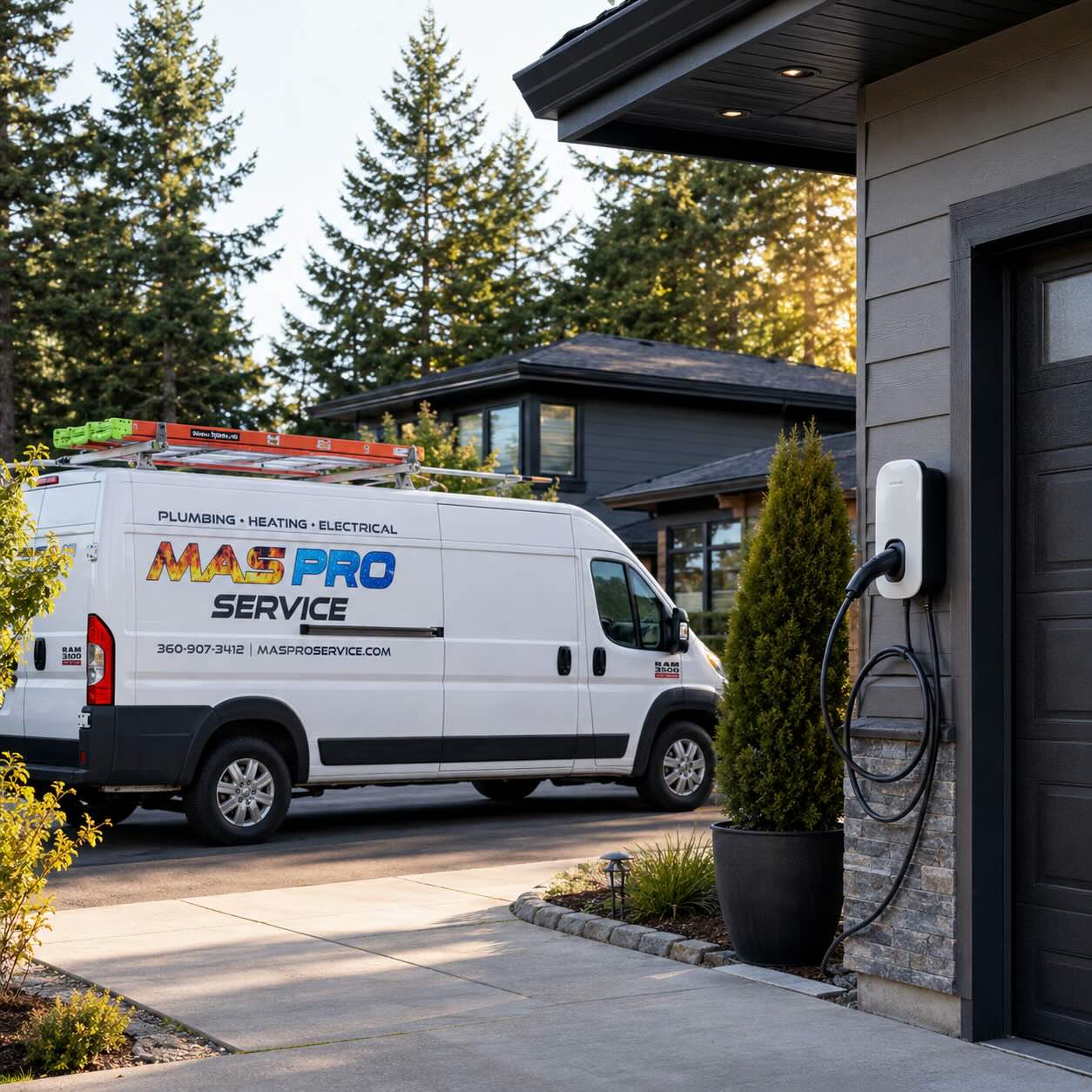
Electric vehicles are everywhere in Southwest Washington now, and most Tesla owners reach the same conclusion within a few weeks: charging at home is far more convenient than chasing public stations. The fastest, cleanest way to do that is a hardwired Tesla Wall Connector — and the first question is almost always, “How much does it cost to install one?”
As with most electrical work, the answer depends on your home — but in predictable ways. Below we break down exactly what drives the price of a home Tesla charger install, the Clark County permit and panel details that catch people off guard, and how to know what your specific home will need before you commit.
The short answer: For most Clark County homes, installing a Tesla Wall Connector runs roughly $750–$2,500, depending mainly on how far the charger sits from your electrical panel and whether your panel has room for the new circuit. If an electrical panel upgrade is needed, the total can reach $3,000–$5,000+. The charger hardware is the small part — the wiring and panel capacity are what move the number.
Key Factors That Affect Tesla Charger Cost
No two installs are identical, which is why a quote should always follow a look at your actual panel and garage. These are the factors with the biggest impact on your total:
Distance to the panel
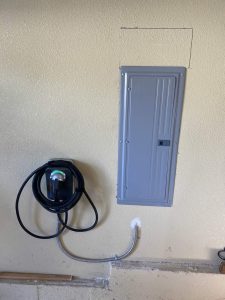
The run from your electrical panel to the charger location. A charger right beside the panel is cheap; a long run across the house adds wire, conduit, and labor.
Panel capacity
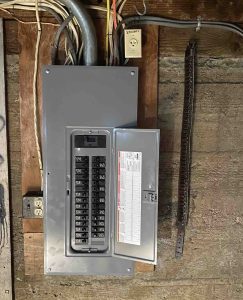
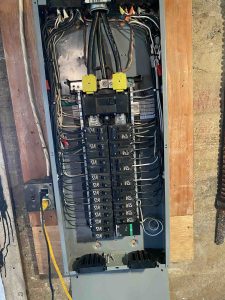
A Wall Connector needs a dedicated 60-amp circuit for full speed. Older Vancouver homes often have full or undersized panels that may need an upgrade first.
Amperage & charge speed
Wiring for the full 48-amp output costs a bit more than a lower-amp setup, but delivers far faster charging — usually worth it.
Indoor vs. outdoor
A clean garage install is straightforward. Outdoor or detached-garage runs need weatherproofing and sometimes trenching, which adds to the cost.
Wall finish & routing
Open stud walls are easy; finished drywall, brick, or a long fishing run means more labor to keep it tidy.
Permit & inspection
A dedicated EV circuit is permitted electrical work in Washington — included by a licensed installer, covered below.
Tesla Charger Installation Cost by Scenario
Here’s how the most common situations map to a realistic installed range for a Clark County home. Use it as a planning guide — an on-site assessment gives you the firm number.
| Scenario | What’s involved | Typical installed |
|---|---|---|
| Charger near panel | Short run, panel has open space, garage install | $750–$1,200 |
| Standard install | Moderate run across the garage/wall, dedicated 60A circuit | $1,200–$2,000 |
| Long or outdoor run | Long conduit run, weatherproofing, possible trenching | $2,000–$3,000 |
| Panel upgrade needed | Older/full panel replaced or a subpanel added first | $3,000–$5,000+ |
Ranges are planning estimates and vary with site conditions. The Wall Connector hardware itself is sold separately by Tesla; these figures cover the installation. For a fuller cost picture, see our guide to EV charger installation cost and Clark County panel requirements and permits.
Hardwired Wall Connector vs. Plug-In
Tesla owners often weigh a permanently wired Wall Connector against a plug-in (NEMA 14-50) setup. Both work; here’s the short version.
Hardwired Wall Connector
- Full 48A / faster charging
- Cleaner, permanent, weather-rated
- Best for daily drivers and outdoor installs
Plug-in (NEMA 14-50)
- Lower amperage, slightly slower
- Portable / can move with you
- Outlet still needs proper code-compliant wiring
We dig into the trade-offs in hardwired vs. plug-in EV charger: which is actually better and cheaper.
Permits, Panels & Rebates in Clark County
Permits & inspection
A Tesla charger runs on a dedicated high-amp circuit, so it’s permitted electrical work. In Washington, electrical permits are issued through the Department of Labor & Industries (L&I), and the install has to pass inspection. A licensed electrician pulls and manages the permit as part of the job — you shouldn’t have to handle it yourself.
Older Vancouver-area panels
Many homes across Vancouver, Camas, and the older parts of Clark County have 100-amp or already-full panels that don’t have room for a 60-amp EV circuit. That’s the single most common reason a Tesla install costs more than expected — and why an electrician should check your panel before quoting.
Rebates worth checking
Clark Public Utilities has offered EV charger rebate programs that can offset part of the cost for qualifying customers. It’s worth confirming what’s currently available before you install — we cover the details in Clark Public Utilities EV charger rebate programs.
Why a Licensed Electrician Matters Here
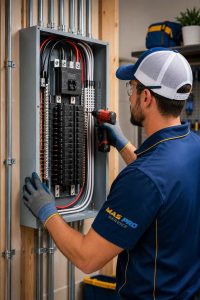
A Wall Connector tying into a 60-amp circuit isn’t a typical DIY project — it involves your main panel, high amperage, and code requirements that an inspector will check. Done wrong, it’s a fire risk and can void warranties. Done right by a licensed pro, it’s safe, permitted, and built to last.
- Correct circuit and breaker sizing for full charge speed.
- Permit pulled and inspection passed the first time.
- Panel capacity verified — no surprise overloads later.
- Clean, weather-rated install that holds up outdoors.
If you’re tempted to do it solo, read can I install my own EV charger? and what to know before installing an EV charger first.
Why Clark County EV Owners Trust MAS Pro
MAS Pro is a locally owned, licensed and bonded Washington contractor specializing in residential and commercial electrical work across Vancouver and Clark County. Our certified electricians handle EV chargers, panels, and whole-home systems — backed by deep roots in the trades.
Tesla Charger Installation FAQ
For most Clark County homes, installing a Tesla Wall Connector costs roughly $750 to $2,500, depending mainly on the distance from your electrical panel and whether the panel has room for a dedicated 60-amp circuit. If a panel upgrade is required first, the total can reach $3,000 to $5,000 or more. The charger hardware is sold separately by Tesla; these figures cover installation.
Sometimes. A Tesla Wall Connector needs a dedicated 60-amp circuit for full charge speed. Many older Vancouver-area homes have 100-amp or already-full panels without room for that circuit, in which case a panel upgrade or subpanel is needed first. An electrician can check your panel capacity before quoting so there are no surprises.
Yes. An EV charger runs on a dedicated high-amp circuit, so it is permitted electrical work. In Washington, electrical permits are issued through the Department of Labor and Industries (L&I), and the install must pass inspection. A licensed installer handles the permit as part of the job.
For most daily drivers, a hardwired Tesla Wall Connector is recommended — it delivers the fastest charging at 48 amps, is permanent and weather-rated, and is ideal for outdoor installs. A plug-in NEMA 14-50 setup is slightly slower but portable. Either way, the circuit must be wired to code by a licensed electrician.
Possibly. Clark Public Utilities has offered EV charger rebate programs that can offset part of the cost for qualifying customers. Programs and amounts change, so confirm what is currently available before installing. A local installer can point you to the current program details.
It is strongly discouraged. A Wall Connector ties into your main panel on a 60-amp circuit, which involves real fire risk, code requirements, and an inspection. Incorrect work can also void warranties. A licensed electrician ensures correct sizing, a passed inspection, and a safe, lasting install.
Get a Tesla Charger Quote for Your Home
MAS Pro will check your panel, confirm the best spot for your Wall Connector, and give you a clear, all-in price — permits included. Serving Vancouver and all of Clark County.