Skip to content
Quick answer: To prepare for a power outage in Washington, assemble a supply kit before storm season, secure a backup power source, install whole-home surge protection, and stay at least 35 feet from any downed line. Never run a portable generator indoors or in a garage.
To prepare for a power outage in Washington, the work that actually matters happens before the storm arrives, not during it. Clark County windstorm season typically ramps up through fall and winter, when saturated ground and high wind gusts combine to bring down trees and power lines across the region. The homes that come through a multi-day outage comfortably are usually the ones that did three things ahead of time: assembled a supply kit, secured backup power, and knew exactly what to do the moment the lights went out.
Build Your Outage Kit Before You Need It
Every guide on how to prepare for a power outage in Washington starts in the same place: an emergency kit assembled well before severe weather arrives, not after a forecast turns serious. At minimum, that means a battery-powered radio, flashlights with spare batteries, several days of non-perishable food and water, a basic first aid kit, and warm blankets and clothing. If anyone in your household depends on electric or battery-powered medical equipment, plan a backup power source and a fallback location in advance, since that is not something to figure out mid-outage.
Keep the kit somewhere every household member knows how to find in the dark. Pets and livestock need their own supplies too, including extra water if your home relies on a well pump, since that stops working the moment the power does.
Backup Power Options Worth Comparing
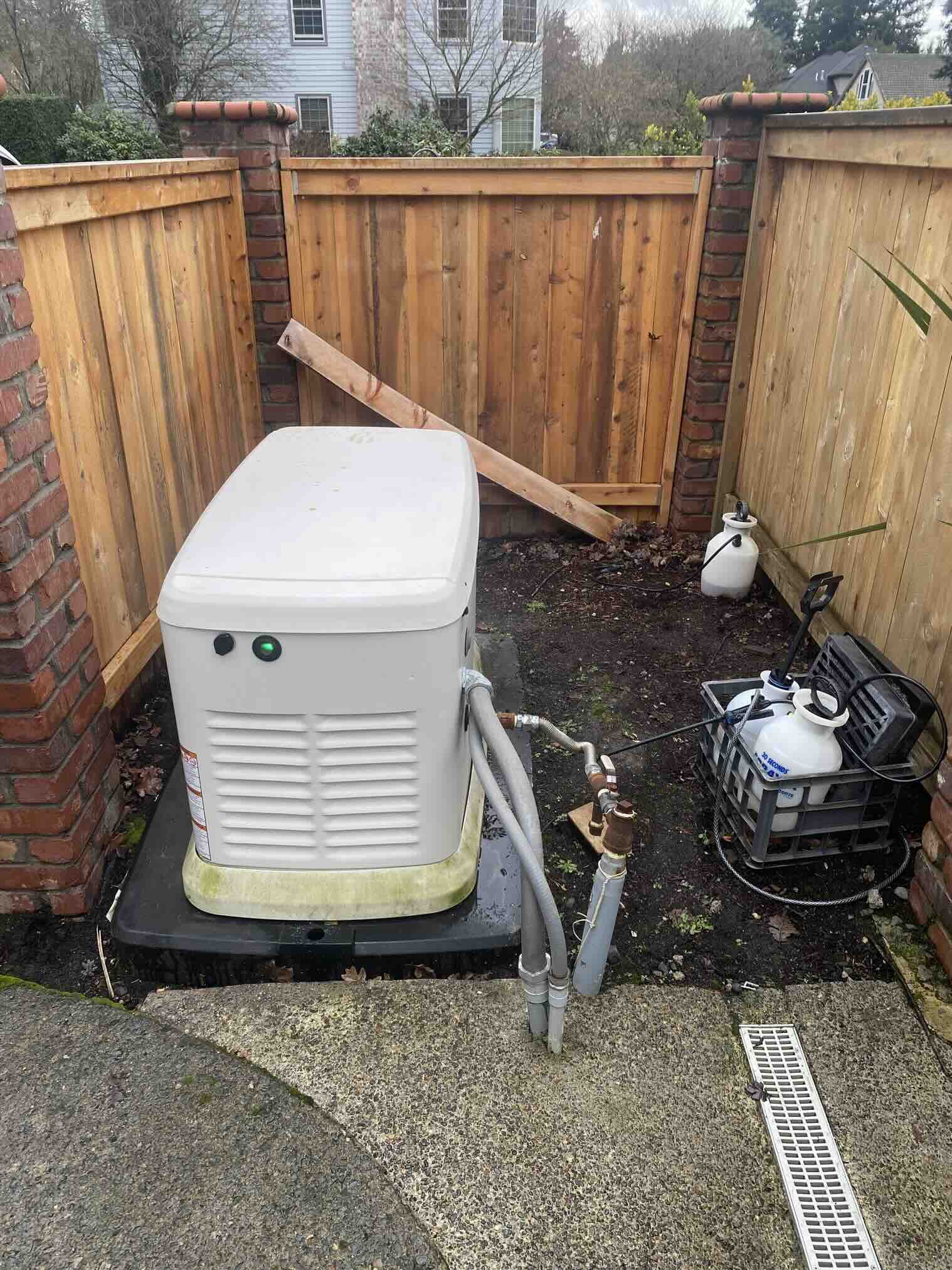
When it comes to backup power options, the right choice depends on how long outages tend to last in your area and what you need to keep running. A portable generator can cover essentials such as a refrigerator, some lighting, and a sump pump for a few hours at a time, but it requires manual setup and safe outdoor placement every time it runs. A standby generator, wired into your panel through an automatic transfer switch, starts automatically within seconds of an outage and can cover a much larger portion of the home without anyone lifting a finger. If Clark County windstorm power outages affect your neighborhood more than once or twice a year, the convenience and uninterrupted power of a standby system often justify its higher upfront cost.
Whichever option you choose, generator safety is not optional. Never run a portable generator indoors, in a garage, or near windows and doors, since carbon monoxide from the exhaust is odorless and can be fatal in an enclosed space. Properly installed standby generators are permanently located outdoors at code-required clearances, greatly reducing the carbon monoxide risks associated with portable generators.
Protect What You Cannot Easily Replace
Power outages caused by windstorms are often followed by power surges as electricity is restored, and that surge can damage electronics, appliances, and HVAC equipment that survived the outage itself. Whole-home surge protection installed at the panel helps protect electronics, appliances, and other equipment throughout the home, rather than relying on individual surge strips at each outlet.
Before the Storm Hits
A short pre-storm walk around the property catches problems while there is still time to fix them. Look for dead branches or leaning trees near the house or power lines, secure loose patio furniture and anything else that could become a projectile in high wind, and locate the manual release on your garage door opener so you are not stuck if the power cuts out while the door is down. If you have not run your generator in a while, start it now rather than waiting for the storm, since a generator that will not start is only discovered at the worst possible moment.
During the Outage
If the power goes out, treat any downed line as live and stay at least 35 feet away, and report it immediately rather than assuming someone else already has. Turn off and unplug sensitive electronics until power is confirmed stable, and never use a gas stove, charcoal, or any outdoor heating equipment indoors for warmth. If your outage stretches into hours rather than minutes, our post on what to do first during a whole-house power outage walks through the immediate steps in more detail.
Sizing a Standby Generator Before Storm Season
If this is the year you decide to stop waiting out storms with flashlights, start with sizing. MAS Pro can help you choose the right size generator for your home, explain your installation options, and provide a clear estimate before work begins. Give us a call to schedule a consultation.
Frequently Asked Questions
How far should I stay away from a downed power line?
At least 35 feet. Treat every downed line as energized, even if it appears inactive, and report it right away instead of approaching it.
What backup power options make sense for frequent outages?
If outages happen more than once or twice a year in your area, a standby generator with an automatic transfer switch offers more reliable, hands-off coverage than a portable unit.
Can I run a portable generator in my garage during a storm?
No. Portable generators must run outdoors, away from windows and doors, due to the risk of fatal carbon monoxide buildup in enclosed spaces.
Sources
Washington State Department of Health. Windstorms https://doh.wa.gov/emergencies/be-prepared-be-safe/severe-weather-and-natural-disasters/windstorms
Pacific Power. Storm and Emergency Preparedness https://www.pacificpower.net/outages-safety/storm-emergency-preparedness.html
Seattle City Light. Prepare for a Windstorm https://powerlines.seattle.gov/outage/windstorm/