Skip to content
A breaker trips for one of three reasons: too much is running on the circuit (overload), a hot wire is touching neutral or ground (short), or current is leaking somewhere it shouldn’t (ground fault). The breaker is doing its job. The question is what it’s reacting to.
How urgent is it?
Figure out which one it is
1 | Note when it trips. Trips after a few minutes of the space heater, microwave, or hair dryer point to an overload. Trips the instant you flip it back on point to a short. |
2 | Unplug everything on that circuit. Then reset the breaker by pushing the handle fully to OFF and back to ON. |
3 | Plug things back in one at a time. If it trips when one device goes in, that device is likely the problem. Try it on another circuit to confirm. |
4 | Spread out the load. If it only trips when two big appliances run together, move one to a different circuit. Fall space heater season is the most common time we see this. |
5 | Reset it once, not over and over. Repeated resets on a real fault heat up the wiring and wear out the breaker. |
Call an electrician if
| It trips right away with nothing plugged in. That usually means a short in the wiring, an outlet, or a switch. |
| It trips randomly with no clear pattern, especially on an AFCI or GFCI breaker. |
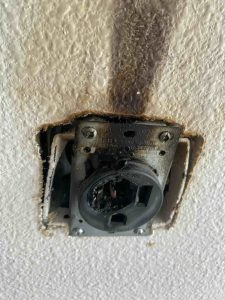
| You notice heat, a burning smell, or scorch marks at the panel or an outlet. |
| The fix you’re tempted to try is a bigger breaker. That removes the protection and lets the wire overheat. |
Quick answers
Can I replace a 15 amp breaker with a 20 amp?
Not unless the wire is sized for 20 amps. Most 15 amp circuits use 14 gauge wire, which can overheat on a 20 amp breaker without ever tripping it.
Is it dangerous if my breaker keeps tripping?
The tripping itself is the safety feature. Ignoring it, taping it on, or upsizing the breaker is what creates the danger.
Related guides
Warning signs of a failing circuit breakerWhy a bigger breaker is a dangerous DIY fixArc fault breakers explainedMost breakers that won’t reset haven’t been pushed all the way to OFF first. If you’ve done that and it still snaps back off, the circuit still has a fault on it or the breaker itself is worn out. Don’t force it.
How urgent is it?
Reset it the right way
1 | Find the tripped breaker. It usually sits in the middle position, between ON and OFF, or shows a colored flag. |
2 | Push it firmly to OFF. You should feel a click. This resets the internal latch. Skipping this step is the most common reason a breaker won’t go back on. |
3 | Push it to ON. If it holds, you’re done. If it snaps back, stop. |
4 | Unplug everything on that circuit and try once more. If it holds now, something you unplugged is causing the fault. If it still won’t hold with nothing connected, the problem is in the wiring or the breaker. |
Call an electrician if
| It won’t stay on with nothing plugged in. |
| The breaker feels loose, warm, or mushy, or the handle won’t click. |
| You have a Federal Pacific, Zinsco, or other recalled panel. Some of these breakers are known to fail in ways a homeowner can’t see. |
| You’re tempted to hold it on or tape it. That’s how wiring overheats. |
Quick answers
Can a breaker just wear out?
Yes. Breakers that have tripped many times or are decades old can lose their ability to latch or to trip correctly. Replacing one is a quick job for an electrician.
Is it safe to keep trying to reset it?
One or two careful tries is fine. Repeatedly forcing a breaker onto a live fault can damage the breaker and the wire.
Related guides
Is your circuit breaker going bad?Electrical panel recall listElectrical panel replacementYour home gets power on two 120 volt ‘legs.’ Half your circuits run on one, half on the other. When half the house goes dead, one leg has usually been lost, either at the utility’s line, the meter, or the main connection in your panel. It is not something to fix yourself.
How urgent is it?
What to check
1 | Look at the panel. Reset any tripped breakers the normal way. If a single big breaker is tripped, that may explain it. |
2 | Notice your 240V appliances. A dryer that spins but won’t heat, or an electric range that’s half working, is a strong sign you’ve lost a leg. |
3 | Check with neighbors. If they have the same problem, it’s on the utility side. |
4 | Call your utility. Clark Public Utilities or Cowlitz PUD will check the line and meter at no cost. Many lost-leg problems are on their side. |
Turn off the main and call us right away if
| Some lights are brighter than normal while others are dim. That can mean a lost neutral, which can damage electronics and appliances fast. |
| The utility says their side is fine. |
| You see scorching, smell burning, or hear buzzing at the meter or panel. |
| Power keeps coming and going on the same half of the house. |
Quick answers
Who fixes it, the utility or an electrician?
The utility handles the line to your house and the meter. Problems at the meter base, main breaker, or inside the panel are on the homeowner side and need a licensed electrician.
Is it safe to stay in the house?
Usually, yes, if lights are simply off. If lights are flickering bright and dim or you smell burning, turn off the main breaker and call.
Related guides
Whole-house power outage: what to do firstPrepare for storm season outagesEmergency electrical servicesMost dead outlets are on a tripped GFCI, a tripped breaker, or a wall switch. If none of those bring it back, a connection has likely come loose, either in that outlet or one further up the line.
How urgent is it?
Check these in order
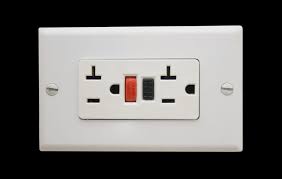
1 | Find the GFCI. One GFCI can protect several outlets, including ones in other rooms. Check bathrooms, the kitchen, the garage, outside, and the basement. Press reset firmly. |
2 | Check the panel. Look for a breaker in the middle position. Push it to OFF, then ON. |
3 | Try the wall switches. Many rooms have an outlet, or half of one, controlled by a switch. Flip every switch in the room. |
4 | Test with something you know works. A lamp is better than a phone charger, which can fail on its own. |
5 | Check nearby outlets. If several in a row are dead, the loose connection is probably at the last working outlet before them. |
Call an electrician if
| Nothing above brings it back. |
| The outlet is warm, discolored, or loose in the wall, or plugs fall out easily. |
| Outlets work sometimes and quit other times. Intermittent power means a loose connection that can overheat. |
Quick answers
Why did my outlet stop working but the breaker isn’t tripped?
Check for a tripped GFCI elsewhere in the house first. If there isn’t one, a wire has likely loosened at that outlet or an upstream one. That’s common with ‘backstab’ connections on older outlets.
Can I replace a dead outlet myself?
If you’re comfortable turning off the breaker and testing for power, a like-for-like swap is doable. If the wiring looks scorched, aluminum, or confusing, stop and call.
Related guides
Outdoor outlet not workingWhat is a GFCI?Replace an outlet the right wayA GFCI won’t reset if it has no power, if the fault that tripped it is still there, if it’s wet, or if the GFCI itself has failed. Newer GFCIs also refuse to reset if they were wired backward.
How urgent is it?
Work through it
1 | Check for power. Look at the breaker panel. Also check whether this GFCI is downstream of another GFCI. If the first one is tripped, the second can’t reset. |
2 | Unplug everything from it and the outlets it protects. A faulty appliance, extension cord, or holiday lights can trip it again the moment you reset. |
3 | Let it dry. Outdoor and garage GFCIs often trip after heavy rain. Give it a few hours or a dry day, then try again. A weatherproof in-use cover helps prevent it. |
4 | Press reset firmly. It should click and stay in. If it clicks and pops right back out with nothing plugged in, there’s a fault in the wiring or the device. |
Call an electrician if
| It won’t reset with power present and nothing plugged in. |
| It was recently replaced and has never worked. The line and load wires may be reversed. |
| It’s old and the test button no longer trips it. A GFCI that won’t trip isn’t protecting anyone. |
| It’s warm, buzzing, or scorched. |
Quick answers
How long do GFCI outlets last?
Many last a decade or more, but outdoor and high-humidity locations wear them out sooner. Press the test button monthly. If it doesn’t trip, replace it.
Why does my GFCI keep tripping in the rain?
Water is getting into the outlet box or a plugged-in cord. Check the cover, seal gaps, and look for damaged outdoor cords.
Related guides
What is a GFCI?GFCI protection and real home electrical dangerWhy is my outlet not working?One flickering light is usually the bulb, the fixture, or a dimmer that doesn’t match LED bulbs. Flickering across the whole house points to a loose connection at the panel, the meter, or the utility’s line.
How urgent is it?
If it’s one light
1 | Tighten or swap the bulb. A loose or failing bulb is the most common cause. |
2 | Check the dimmer. Older dimmers were built for incandescent bulbs and make LEDs flicker. Look for an LED-compatible dimmer or ‘dimmable’ on the bulb box. |
3 | Wiggle test. If it flickers when you tap the fixture or move the switch, the connection in that fixture or switch is loose. |
If it’s the whole house
1 | A brief dip when the furnace, AC, or dryer starts can be normal. Constant or worsening flicker is not. |
2 | Ask your neighbors. If they see it too, call Clark Public Utilities or Cowlitz PUD. Wind and trees on lines are common causes here. |
3 | Watch for bright and dim at once. Some lights brighter while others dim can mean a lost neutral. Turn off the main and call. |
Call an electrician if
| Flickering is house-wide and the utility’s side checks out. |
| It comes with buzzing, a burning smell, or warm switches. |
| It keeps getting worse over days or weeks. |
Quick answers
Are flickering lights dangerous?
One bulb flickering usually isn’t. Flicker across multiple rooms often means a loose connection, and loose connections create heat. That’s worth checking soon.
Why do my LED lights flicker?
Usually an incompatible dimmer or a cheap driver inside the bulb. Try a different brand of bulb or an LED-rated dimmer.
Related guides
Install a dimmer switch the right wayCommon causes of power surgesWhy did half my house lose power?Start with the bulb and the breaker. If both are fine and the switch still does nothing, works only sometimes, or feels warm, the switch is worn out or a wire behind it has come loose.
How urgent is it?
Check these first
1 | Swap the bulb with one you know works. |
2 | Check the breaker for that room. |
3 | Look for a second switch. On stairs and in hallways, two switches control one light. If one was replaced recently, the wires may be on the wrong terminals. |
4 | Think about recent changes. A new smart switch that won’t power up often needs a neutral wire that older boxes don’t have. |
Call an electrician if
| The switch feels warm, buzzes, or crackles. |
| It works only when you hold it at a certain angle. |
| You replaced it and now nothing works, or the breaker trips. |
| Several switches in the house act up at once. |
Quick answers
Why does my light switch buzz?
A faint hum from a dimmer can be normal, especially with LEDs. A plain on/off switch should be silent. Buzzing from a standard switch means a loose or arcing connection.
Should a light switch feel warm?
Dimmers run slightly warm. A standard switch shouldn’t feel warm at all. If it does, turn off the breaker and have it checked.
Related guides
Why is my outlet hot?Lighting, switches, and smart upgradesWhy are my lights flickering?A burning smell or buzzing from an outlet, switch, or panel means something is overheating or arcing. Treat it as urgent. Turn off the breaker if you can do it safely, and if you see smoke, get out and call 911.
How urgent is it?
What to do in the next five minutes
1 | Find the source , if you can do it quickly. Smell near outlets, switches, light fixtures, and the panel. Electrical burning often smells like hot plastic or fish. |
2 | Turn off that breaker. If you can’t find the source, or the smell is at the panel, turn off the main. |
3 | Unplug anything nearby that’s safe to touch. |
4 | Call an electrician. Don’t turn the power back on to see if it happens again. |
Get out and call 911 if
| You see smoke or flames. |
| The panel, outlet, or wall is hot to the touch. |
| The smell is getting stronger after the power is off. |
Quick answers
Is a burning smell from the furnace normal in the fall?
A dusty burning smell the first few times the heat runs each season is usually dust burning off. It should fade within a day. A plastic or electrical smell, or one that doesn’t fade, needs a technician.
Why is my electrical panel buzzing?
A panel should be close to silent. Buzzing or crackling usually means a loose connection or a failing breaker, and some older panels are more prone to it. Call before it gets worse.