Skip to content

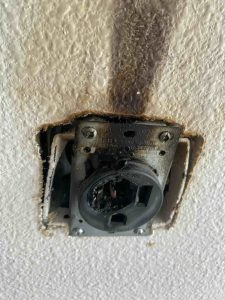
The short answer: Put down the phone, turn it off. From the breaker to be on the safe side. If your outlet feels hot, smells like burning plastic, or honestly smells like anything other than nothing. If it looks brown or has a melted spots. Please for the love of dandelions stop using it. Stop using it, turn off its breaker if you can do it safely, and call an electrician. Not your brother who knows a thing or two. Or that friend from Uni who has a degree in critical thinking. An electrican at the top of google. We’re trying real hard to stay there so you should see us. Get a professional to come look at it and replace it.
These issues often run deeper than just replacing the outlet. Electricity is that topic you skipped in high school so we won’t try to explain all the reason it could be literally falling apart in slow motion.
You could have a short, water damage, or something further up the line causing issues.
- A short circuit, where power takes a path it shouldn’t. See what causes short circuits.
- Water getting into an outlet or box, common with outdoor, bathroom, and kitchen outlets. Here’s why electricity and water don’t mix.
- A loose connection further up the circuit, in another outlet, a switch, or a junction box.
- An overloaded circuit carrying more than it was built for. See the most common electrical hazards in homes.
- Worn outlet contacts that no longer grip the plug.
- Older aluminum branch wiring with failing connections.
Hot outlets are one of the most common electrical repair calls we get from homeowners in Woodland, La Center, Ridgefield, Battle Ground, and the rest of Clark and Cowlitz County. They show up in old farmhouses and in newer builds alike. Heating season makes them more common, because space heaters and electric heat put a heavy load on outlets for hours at a time.
But Hey, not all warm outlets are bad. Yes we just scared you but sometimes outlets get hot due to high regular extended use. Still not ideal, but it is allowed to get hot, just not hot enough that it would compromise the permanent look of it, or change color.
This guide covers how to tell normal warmth from a real problem, what causes outlets to overheat, what to do right now, and what a proper repair looks like in Washington.
Warm vs. hot: when to worry
Use this to decide how fast you need help. When in doubt, treat it as urgent.
| What you notice | What it usually means | What to do |
|---|---|---|
| Slightly warm while a space heater or hair dryer runs, cools off after | Normal heat from a heavy load | Plug heaters straight into the wall, not a power strip or extension cord. Watch it. |
| Too hot to keep your hand on | A loose or worn connection building resistance | Stop using it and call today. |
| Warm with nothing plugged in | A bad connection in the box, often feeding outlets further down the circuit | Stop using that circuit and call today. |
| Brown or black marks, melted plastic, or a burning smell | Overheating has already damaged the outlet | Turn off the breaker and call right away. |
| Sparks every time you plug in, or sparks with nothing plugged in | A loose connection or failing outlet | Turn off the breaker and call right away. |
| A light switch that feels hot | A loose connection, or a dimmer carrying too much load | Call today. Dimmers run warm, but they should not be hot. |
A small, quick spark when you plug in something that is already switched on can happen. Repeated sparks, loud pops, or sparks that leave marks are not normal.
Why outlets overheat
Heat builds up wherever electricity has to push through a bad connection. A tight, clean connection lets current pass easily. A loose, worn, or corroded one resists it, and that resistance turns into heat right at the outlet. These are the causes we see most. So often you can have a great outlet and a crappy plug you’re trying to jam in there.
Loose or worn connections
Screw terminals can loosen over years of heating and cooling. Many builder-grade outlets also use push-in “backstab” connections instead of screws, and those can lose their grip over time. Because outlets are often wired in a chain, one bad connection can heat up while powering every outlet after it.
Worn-out outlet contacts
Inside every outlet, metal clips grip the plug prongs. After years of use, they lose tension. If plugs fall out or sag, the outlet is worn and should be replaced. Here is how to replace an outlet the right way.
Space heaters and other heavy loads
A typical 1,500 watt space heater pulls about 12.5 amps, which is most of what a standard 15 amp circuit can carry, and it pulls it for hours. That steady load finds any weak connection fast. Plug heaters directly into a wall outlet, keep them off power strips and extension cords, and don’t share that outlet with other big loads.
Aluminum branch wiring
Some homes built from the mid-1960s to the early 1970s were wired with aluminum instead of copper. A survey done for the U.S. Consumer Product Safety Commission found that homes built before 1972 with aluminum wiring were 55 times more likely to have at least one outlet connection reach fire hazard conditions than homes wired with copper. Aluminum needs special connectors, and a standard outlet swap can make the problem worse. See our guide to aluminum wiring in Clark County homes.
Damaged wiring
Rodents chewing insulation, a nail or screw through a cable, or an old repair done wrong can all create hot spots at or near an outlet.
What to do right now
Stop using the outlet. If it is not smoking or sparking, unplug anything in it by pulling the plug, not the cord. If it is smoking or sparking, don’t touch it.
Turn off the breaker. Switch off the breaker for that outlet. If your panel isn’t labeled and the situation feels urgent, turn off the main breaker.
Get out if there is smoke or fire. If you see smoke or flames, or the wall around the outlet feels hot, leave the house and call 911.
Don’t keep resetting a tripped breaker. If the breaker trips again after you reset it, leave it off.
Take a photo… of the outlet not yourself. Pictures of any marks or melted plastic help your electrician and can help with an insurance claim. Wait a second, if there’s smoke or fire how should I take a photo. We’ll that’s a great question. I suppose at this point a photo of the whole house would be fine.
Call an electrician or don’t and call the fire department later. Don’t open the outlet to look inside. The damage that matters is usually behind the cover plate.
Why a hot outlet isn’t a simple swap
Heat doesn’t stop at the outlet. It travels into the wires and the box, and it can leave insulation brittle several inches back. A good repair means finding the cause, cutting back to undamaged wire, checking the other outlets on the circuit, and installing the right device.
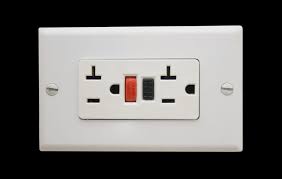
Replacing an outlet can also trigger current code requirements. Depending on the room, the new outlet may need arc-fault (AFCI) or ground-fault (GFCI) protection. In Washington, electrical permits and inspections go through L&I, not the county. Our guide to electrical permits in Clark County explains when a permit comes into play.
The numbers behind the warning
Electrical problems are a leading cause of home fires. According to the National Fire Protection Association, electrical failures or malfunctions caused an average of 46,700 U.S. home fires a year from 2015 to 2019, resulting in 390 deaths, 1,330 injuries, and about $1.5 billion in property damage each year. A hot outlet is one of the few warning signs you get before a problem like that starts.
What we do on a hot outlet call
Find what is causing the heat, whether that’s the outlet, a connection upstream, or the load plugged into it.
Cut back any heat-damaged wire and remake the connections properly.
Check the other outlets and switches on the same circuit.
Replace the outlet with the right device for the room, including AFCI or GFCI protection where it’s needed.
Tell you what we found and whether anything else in the house needs attention.
Electrical repair in Woodland and Clark County
We handle hot outlets, sparking outlets, hot switches, and other electrical repairs across Woodland, La Center, Ridgefield, Battle Ground, Brush Prairie, Vancouver, Camas, Longview, and Kalama. See our electrical repair services, our Woodland electrician page, or emergency electrical services if you need help fast.
Hot outlet questions
Is it normal for an outlet to be warm?
A little warmth while a heavy load like a space heater runs is common, and it should cool down once the load is off. An outlet that is hot to the touch, warm with nothing plugged in, or discolored is not normal and needs to be checked.
Why is my outlet hot with nothing plugged in?
Outlets are often wired in a chain, so power for other outlets passes through the connections in that box. A loose or failing connection there can heat up even when nothing is plugged into that outlet. Stop using the circuit and have it checked.
Why does my outlet spark when I plug something in?
A tiny, quick spark can happen when you plug in something that is already turned on. Repeated sparks, sparks with a pop or a burning smell, or sparks that leave black marks mean the outlet or its wiring is failing.
Is a warm light switch dangerous?
Dimmer switches run warm because they control power, and that is normal within limits. A standard on/off switch should not feel warm. A switch that is hot, buzzes, or smells like burning has a loose connection or is overloaded.
Can a hot outlet cause a fire?
Yes. Overheating connections can melt plastic, damage wire insulation, and start fires inside the wall. That is why a hot outlet should be treated as a repair for today, not something to watch.
Can I replace a hot outlet myself?
A hot outlet is a sign of a problem that may go beyond the outlet itself, like damaged wire, a bad connection upstream, or aluminum wiring. Swapping the outlet can hide the cause without fixing it. We recommend having an electrician find and fix the source.
Have a hot or sparking outlet?
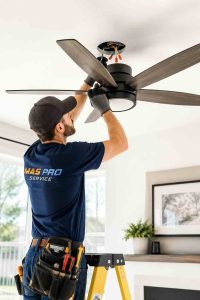
Call MAS Pro Service and tell us what you’re seeing. We’ll help you figure out how urgent it is and get a repair on the schedule.
Call (360) 907-3412 See electrical repair services